Harvard University's endowment surged by over $11 billion to reach nearly $68 billion in fiscal year 2026, generating an exceptional 27.1 percent return that distributed $2.6 billion toward operations and student financial aid.
Admissions DataInside Higher Ed • Oct 16, 2026★ FEATURED
A study of 292 admissions officers reveals that prospective engineering applicants who lacked high school calculus were 16.4% less likely to be recommended for admission, even when their schools did not offer the course.
Testing PolicyThe College Investor • Oct 12, 2026★ FEATURED
The test-optional era is rapidly ending across selective institutions, with 72 colleges and university systems requiring SAT or ACT scores for students entering in fall 2027 and another six setting future reinstatement dates.
Testing PolicyCollegewise • Oct 12, 2026★ FEATURED
Common App data reveals that test-submitting applicants now outnumber non-submitters for the first time since 2020, as admissions experts analyze why competitive SAT/ACT scores provide a crucial edge even at remaining test-optional institutions.
Sponsored Partner
Beacon College Consulting
Comprehensive College Planning for Busy Families
★4.7
Affordable, professional guidance on college lists, essays, and financial aid. We guide you through every step of the process with zero stress.
The University of California undergraduate admission application filing window is officially open through November 30, 2026, for fall 2027 applicants across all nine undergraduate campuses, including UC Berkeley and UCLA.
U.S. News & World Report announced the launch of U.S. News Direct Admissions, an innovative platform feature enabling higher education institutions to deliver instant, conditional admissions offers to qualified prospective students.
A new faculty committee report at Yale urges elite universities to publish transparent minimum academic thresholds, arguing that holistic admissions opacity fuels widespread applicant anxiety and distrust.
Testing Policythecollegeinvestor.com • Oct 3, 2026★ FEATURED
College Board reported that nearly 2 million students took the SAT as average scores increased for the second consecutive year, coinciding with reinstated testing mandates at top universities.
Caltech Admissions has introduced a 'bucket system' that groups SAT section scores of 780–800 (ACT 35–36) into Bucket A and 750–770 (ACT 33–34) into Bucket B, hiding exact scores within those tiers from the admissions committee to prevent qualified applicants from self-selecting out.
Financial AidInside Higher Ed • Oct 1, 2026★ FEATURED
Citadel founder Ken Griffin has donated $3 billion to Carnegie Mellon University to establish a new CMU Miami campus for 3,500 students and endow the Kenneth C. Griffin School of Computer Science.
Financial AidCollege Board • Oct 1, 2026★ FEATURED
The College Board has officially opened the CSS Profile for the 2027–2028 academic year, unlocking access to over $14 billion in nonfederal institutional aid across hundreds of colleges with fee waivers available for families earning up to $100,000.
Admissions DataDaily Bruin • Oct 1, 2026★ FEATURED
The Department of Justice has launched an investigation into UCLA School of Law alleging non-compliance with federal civil rights standards in its post-affirmative action admissions evaluation protocols.
MIT secured the No. 1 spot in the 2027 U.S. News National Universities Ranking, ending Princeton's 15-year reign behind a new College Scorecard metric evaluating post-graduation earnings by major.
Financial AidThe Chicago Maroon • Oct 1, 2026★ FEATURED
The University of Chicago announced guaranteed free tuition for undergraduate families earning less than $250,000 annually, alongside full coverage of tuition, housing, and food for families making under $125,000.
Admissions DataThe Cornell Daily Sun • Sep 27, 2026★ FEATURED
Institutional data for Cornell's Class of 2030 reveals that Black, Hispanic, and Indigenous enrollment fell to 14%—an 11.3 percentage point drop from the Class of 2027 and the lowest level since the Supreme Court struck down affirmative action.
Financial AidU.S. Department of Education • Sep 23, 2026★ FEATURED
The U.S. Department of Education officially opened the 2027–28 FAFSA form to the general public on September 23, marking the earliest release in program history and enabling applicants to submit federal aid documents well before November 1 early application deadlines.
Admissions DataCalifornia Institute of Technology • Sep 22, 2026★ FEATURED
Caltech reached a tie for No. 5 nationally in the 2027 U.S. News rankings—its biggest jump in 25 years—spurred by top marks in standardized testing after ending test-blind admissions and expanded full-tuition financial aid.
Admissions DataPR Newswire • Sep 22, 2026★ FEATURED
The Massachusetts Institute of Technology claimed the No. 1 spot among National Universities in the 2027 U.S. News & World Report Best Colleges rankings, ending Princeton's 15-year reign following a major methodology revision that prioritizes postgraduate earnings by major.
The University of California Board of Regents reported that core revenue growth is failing to keep pace with operational expenses, raising concerns over funding sustainability as California resident enrollment expansion agreements enter their final year.
Financial AidStudentAid.gov • Sep 18, 2026★ FEATURED
The U.S. Department of Education expanded public Beta 2 testing for the 2027–28 FAFSA ahead of its October 1 nationwide release, with submitted forms processed as permanent financial aid applications.
Admissions DataInside Higher Ed • Sep 18, 2026★ FEATURED
The National Student Clearinghouse Research Center released its 2026 High School Benchmarks Report, highlighting modest enrollment growth and significant college persistence gains among graduates of high-poverty secondary schools.
GeneralThe Daily Princetonian • Sep 17, 2026★ FEATURED
A federal judge granted a nationwide preliminary injunction barring the Department of Homeland Security from imposing a four-year cap on student visas, protecting international undergraduates and graduate researchers from arbitrary extension denials.
Testing Policyadmissions.nd.edu • Sep 9, 2026★ FEATURED
The Brown first-year applicants page has been updated (2,747 -> 5,833 chars).
What was added: + Undergraduate Admission 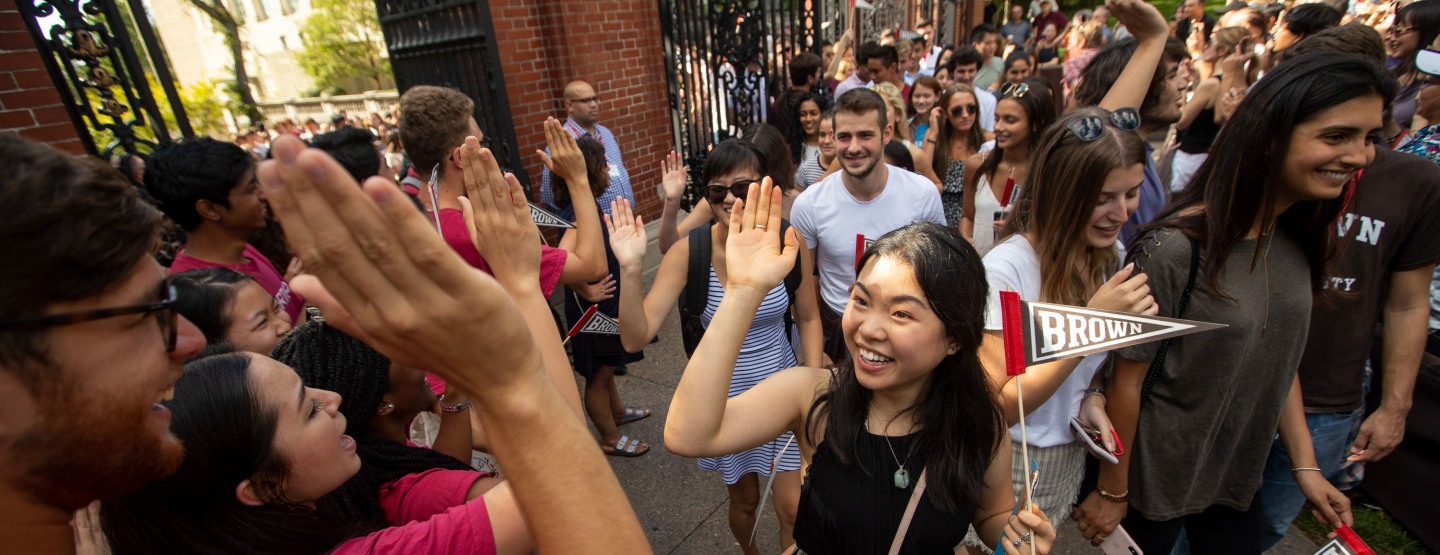 First-Year
Essayswww.admissions.caltech.edu • Jul 1, 2026★ FEATURED
The Caltech essay prompts page has been updated (5,047 -> 7,264 chars).
What was added: + [Home](https://www.admissions.caltech.edu/) / [Apply](https://www.admissions.caltech.edu/apply) / [First-Year Applicants](https://www.admissions.caltech.edu/apply/first-year-applicants) / Supplemental
What
Admissions Datawww.admissions.caltech.edu • Jul 1, 2026★ FEATURED
The MIT essay prompts page has been updated (3,647 -> 3,673 chars).
What was added: + First-year applicants: Essays, activities & academics ===================================================== Rather than asking you to write one long essay, the MIT application consists of several shor
What was
Admissions Datamitadmissions.org • Jul 1, 2026★ FEATURED
The MIT how to apply page has been updated (1,965 -> 2,368 chars).
What was added: + First-year applicants: First-year eligibility ============================================= The first-year application is intended for students who have concluded[01](https://mitadmissions.org/apply/
What was
The Notre Dame essay prompts page has been updated (7,739 -> 7,911 chars).
What was added: + Tips from Counselors  The Notre Dame application is open as of August 1.
Admissions Dataadmissions.nd.edu • Jul 1, 2026★ FEATURED
The UCLA admission requirements page has been updated (5,557 -> 6,098 chars).
What was added: + First-Year Requirements ======================= In addition to your UC application, we take both your academic record and your personal experiences into consideration during the [review
Admissions Dataadmissions.vanderbilt.edu • Jul 1, 2026★ FEATURED
The Vanderbilt how to apply page has been updated (19,184 -> 20,923 chars).
What was removed: - Application Process: First-year | Undergraduate Admissions | Vanderbilt University > Application Process: First-year Required Application Materials All required parts of the Common Application or Coal
Cornell has released all college-specific supplemental essay prompts for Fall 2027 applicants. Arts & Sciences asks students to discuss their passion for learning and how they would take advantage of the curriculum in a 650-word essay. Engineering requires two 200-word essays and four 100-word short answers covering why engineering, why Cornell Engineering, what brings you joy, and community contributions.
Essaysadmissions.cornell.edu • Jun 24, 2026★ FEATURED
Cornell has released all college-specific supplemental essay prompts for Fall 2027 applicants. Arts & Sciences asks students to discuss their passion for learning in a 650-word essay. Engineering requires two 200-word essays and four 100-word short answers.
Generaladmission.brown.edu • Jun 20, 2026★ FEATURED
Caltech's admit rate is under 5% for both Restrictive Early Action and Regular Decision, with negligible difference between rounds. REA deadline is November 1; RD deadline is January 5, 2027. The school recommends REA for students who have completed calculus, chemistry, and physics prerequisites.
Harvard received a record $684 million in current-use gifts in fiscal year 2026, marking a second consecutive year of record philanthropic giving that accounts for nearly half of the university's operating budget alongside endowment support.
College students face a lot of pressure, especially around exam season, but a few minutes with a friendly dog can offer a world of reassurance. At the University of Michigan, therapy dogs have become popular visitors around campus, often popping up in libraries during exam season and hospitals to
An analysis of Columbia University's 2026–2027 supplemental essay prompts, covering the Core Curriculum fit, list questions, and institutional motivation essays.
Testing Policywww.michigandaily.com • Oct 15, 2026
University of Michigan students and community members gathered in the Ford School of Public Policy Wednesday afternoon to engage in a conversation about the United States’ involvement in the Middle East.
Harvard Executive Vice President Meredith Weenick and CFO Ritu Kalra discussed the University's fiscal 2026 financial report, emphasizing prudent resource management and protection of core teaching and financial aid amid federal policy pressures.
Comprehensive breakdown of the 2026–2027 Harvard College supplemental essay prompts, featuring writing strategies for the intellectual curiosity, community impact, and personal background prompts.
Detailed guide to Princeton University's 2026–2027 supplemental essay prompts, including approaches for the A.B./B.S.E. academic interest statements, civic engagement prompt, and short reflections.
A new multi-state study examines how universities are institutionalizing emergency retention grants of $500 to $1,000 to prevent sudden living expense shocks from derailing college degree completion.
While mindlessly scrolling on TikTok, a familiar scene suddenly appears on the screen. Yellow-golden light spills off the bricks of a West Hall, the same building that hosts hundreds of students for 8 a.m. lectures.
Brown does not formally use third-party applications to check whether applicants used artificial intelligence in admissions essays, according to Associate Provost for Enrollment and Dean of Undergraduate Admission Logan Powell.
Editor’s note: Panelist Michelle Liao serves as a contributor and columnist for The Michigan Daily’s News section and The Statement magazine, respectively.
The University of Pennsylvania launched the Penn Cost Calculator, a tool that gives prospective students and families personalized estimates of their individual cost of attendance and greater transparency around financial aid, as part of the Penn Forward initiative.
Financial AidThe Daily Pennsylvanian • Oct 14, 2026
The University of Pennsylvania launched a custom four-year cost calculator on Oct. 14 to demystify financial aid and provide families with tailored net-cost projections amid published attendance costs approaching $95,000.
More than 40 University of Michigan staff, students and Ypsilanti community members gathered in the Trotter Multicultural Center Monday evening for a data center teach-in by Stop the Data Center, an advocacy organization against the the University’s planned Ypsilanti Township data center in
The Department of Justice filed an appeal to the Ninth Circuit contesting a federal court ruling that struck down executive statutes permitting visa revocations and deportation of noncitizen students based on campus speech.
Admissions leadership from Rice University and the University of Michigan debated supplemental essay strategies in the AI era at NACAC, highlighting how institutions balance deep holistic fit against applicant fatigue.
Connecticut Governor Ned Lamont affirmed he will not support modifying Yale University's state tax exemption amid ongoing settlement negotiations with the federal government regarding medical school admissions policies.
Federal financial aid guidelines confirm that unemployment compensation received in 2025 is imported directly into the 2027-28 FAFSA via IRS data exchange, raising the Student Aid Index and altering institutional aid calculations.
After the Michigan football team’s crushing loss to Minnesota, Wolverines coach Kyle Whittingham and sophomore quarterback Bryce Underwood both expressed a need to reevaluate in the upcoming bye week.  “We’re certainly going to analyze every single possibility,” Whittingham said Oct. 3.
Admissions Datawww.highereddive.com • Oct 13, 2026
A national poll of college-bound high school seniors by the Art & Science Group shows 34% ruled out colleges solely based on state politics—up from 28% in 2024—with nearly three-fourths eliminating institutions at the initial search phase.
Admissions Datawww.michigandaily.com • Oct 13, 2026
The University of Michigan’s three childcare centers are often viewed as one of the most prominent resources for student caregivers — but lengthy enrollment waitlists leave many without care, and students caring for adults aren’t served at all.
The Chicago Maroon editorial board criticized UChicago's Summer Session Early Notification program, arguing that granting pre-November admissions decisions to applicants attending summer sessions costing up to $15,200 exacerbates admissions inequity.
Admissions counselors warn that fragmented university AI policies and unstated expectations of 'AI literacy' in personal statements are creating a severe digital divide for low-income and first-generation applicants.
At NACAC's national convention in Minneapolis, admissions leaders addressed how over 50% of applicants now research universities via AI chatbots and discussed strategies to communicate degree ROI to families facing rising costs.
Federal Student Aid published its official 2027–28 Counselors and Mentors Handbook alongside updated Student Aid Index (SAI) guides to assist advisors and families following the early nationwide rollout of the federal aid form.
Harvard President Alan Garber revealed university legal expenses reached $126 million in FY2025 defending against federal inquiries, visa revocations, and admissions scrutiny, cautioning that Harvard's legal posture sets precedents for peer institutions.
Admissions deans at Rice University and peer institutions detailed strategies to navigate federal visa headwinds and expand global applicant diversity, highlighting Rice's $1.5 million initiative broadening foreign enrollment to 56 nations.
Administrators and researchers from Harvard, Yale, Princeton, Columbia, MIT, Brown, Dartmouth, Cornell, Penn, and UChicago gathered to address systemic outreach gaps and trust barriers facing rural high school applicants.
Admissions DataThe Daily Pennsylvanian • Oct 12, 2026
Penn's Kelly Writers House coordinates directly with undergraduate admissions officers to recruit talented high school creative writers, review personal statements, and convert summer workshop participants into enrolled students.
Admissions strategists dissect UPenn's 2026–2027 supplemental essay requirements, offering actionable frameworks for the iconic 'thank-you note', the campus community prompt, and school-specific essays.
Strategic admissions insights for prospective Rice University applicants, covering the 7.7% acceptance rate, residential college culture, test score mid-ranges, and Early Decision dynamics.
A comprehensive breakdown of Northwestern University's 2026–2027 supplemental essay prompts, featuring strategic guidance on demonstrating community impact and academic curiosity across its six undergraduate schools.
In-depth breakdown of Stanford University's 2026–2027 supplemental essay questions, including tips for the iconic roommate letter, intellectual vitality essay, and short takes.
UChicago's legendary extended essay prompts for the 2026–2027 cycle explore quirky student-crafted premises, from mixed metaphors to origami space engineering and mundane Olympic sports.
Strategic advice for crafting competitive responses to Vanderbilt University's 2026–2027 supplemental essay prompts, focusing on meaningful extracurricular impact and community collaboration.
Columbia University issued a community advisory regarding a Department of Homeland Security regulatory proposal that would surge Optional Practical Training fees from $470 to $70,000 for international graduates.
Over 1,000 higher education institutions missed the Department of Education's October 1 reporting deadline for student outcomes data, triggering potential compliance reviews under federal financial value transparency rules.
A federal judge granted an emergency injunction halting the Education Department's plan to publicly disclose individual foreign donors to elite universities, shielding institutional endowment contributors and donor privacy.
Harvard performance and studio arts courses are overhauling grading metrics ahead of a mandatory FAS policy capping A grades at 20% plus 4 students per class, marking a major culture shift for incoming undergraduates.
Harvard College's Financial Aid Office launched the student-led Harvard Financial Literacy Program (HFLP), shifting from administrative seminars to peer education on budgeting, outside scholarships, and institutional grant aid.
Harvard professors convened to discuss classroom assessment overhauls amid widespread generative AI adoption and ongoing concerns over undergraduate grade compression.
More than 100 people chanted “Regents, regents, you can’t hide, we charge you with genocide” throughout the University of Michigan campus Wednesday afternoon in a walkout marking three years since Hamas’s Oct.
Comprehensive breakdown of Johns Hopkins University's 350-word supplemental essay prompt for the 2026-2027 cycle, focusing on engaging across differences, building bridges, and engineering program requirements.
A national data study examines the impact of ending legacy admissions across selective institutions, showing alumni children representation dropped by more than 50% at Johns Hopkins and Amherst alongside record gains in first-generation enrollment.
Northwestern's McCormick School of Engineering replaced its legacy Engineering Analysis sequence with Engineering Foundations, introducing mandatory Python instruction, data reasoning, and entrepreneurship.
About 100 University of Michigan students, faculty and community members gathered in the Ross School of Business Thursday evening for OUTx, a presentation event featuring five Queer business-affiliated speakers sharing their experiences navigating coming out and how their lives changed as a
A new academic report reveals bachelor's degrees awarded in the humanities and arts at Stanford dropped 56% since 2003, prompting faculty to launch new introductory on-ramps and cross-disciplinary career pathways.
Brown University will eliminate its $80 undergraduate application fee for all seniors attending Providence public and charter high schools starting with the Fall 2027 entry cycle across both Early Decision and Regular Decision.
Stanford, Harvard, Yale, MIT, Caltech, and Brown have been issued federal subpoenas in a broad Department of Labor probe into J-1 visa staffing and foreign scholar appointments on federally funded research.
Brown University received federal subpoenas regarding its sponsorship of J-1 exchange visitor visas and employment practices for international scholars and researchers.
Comprehensive deadline breakdown for UC Berkeley first-year applicants for fall 2027 enrollment, highlighting the strict single application filing period ending November 30 and late March decision notifications.
Detailed overview of UCLA undergraduate application deadlines for fall 2027 entry, detailing the October 1 to November 30 filing period, March 2 Cal Grant priority financial aid deadline, and late March decision releases.
She only wore it once, but cultural memory has preserved it for all time. On June 29, 1994, the same day that then-Prince Charles admitted their marriage collapsed due to his affair with socialite Camilla Bowles, Princess Diana attended a Vanity Fair dinner wearing one of the most iconic outfits in
Essential application timeline for Brown University first-year candidates for the 2026-2027 cycle, highlighting the November 1 binding Early Decision deadline, January 5 Regular Decision cutoff, and reinstated standardized test score requirements.
A Justice Department attorney informed the First Circuit Court of Appeals that Donald Trump would likely reissue a presidential proclamation barring international students from Harvard if judicial injunctions are vacated.
Admissions strategists outline how elite universities evaluate arts portfolios, how faculty reviews serve as admissions tip factors, and what dual-degree programs like Harvard-NEC and Columbia-Juilliard require.
The Law School Admission Council can no longer provide any products or services — including the Law School Admission Test — to Iranian citizens or residents after the U.S. Department of the Treasury’s Office of Foreign Assets Control announced sanctions in late August, which went into effect Sept.
Critical application milestones for Washington University in St. Louis for the 2026-2027 cycle, featuring November 2 deadlines for Early Decision I and Early Action, alongside January 4 cutoffs for Early Decision II and Regular Decision.
“What is the worst thing you have ever done?” is a question that has been rattling around in my brain ever since one of my friends asked me it over lunch one day.
An in-depth analysis of 2026 admissions trends reveals that 42% of U.S. News Top 25 national universities now require standardized test scores—up from roughly 8% in 2023—alongside surging major-specific competition and students submitting an average of seven applications.
Decision release schedule for Brown University Class of 2031 candidates, detailing mid-December notifications for Early Decision applicants and coordinated early April Ivy Day releases for the Regular Decision applicant pool.
Admissions notification timeline for Columbia University Class of 2031 candidates, detailing mid-December releases for binding Early Decision applicants and late March Ivy Day announcements for Regular Decision candidates.
The University of Pennsylvania faculty senate is reviewing undergraduate grading standards and evaluation rubrics following recent grade-compression countermeasures instituted at Harvard and Yale.
Financial Aidinstitutionalinvestor.com • Oct 6, 2026
Fiscal year 2026 university endowment reports released in October reveal sharp dispersion among elite institutions, with Stanford posting a 31.7% return ($61.5B) and UPenn gaining 27.4% ($31.1B), while MIT generated a 10.3% return ($29.2B) to fund undergraduate financial aid.
Harvard's Faculty of Arts and Sciences has authorized 25 new tenure-track faculty searches for the 2026-2027 academic year, signaling a gradual easing of recent fiscal hiring constraints.
First-year WashU Medicine MD and MD/PhD students received their white coats at a ceremony Oct. 2. Other ceremonies recognized incoming students studying physical therapy, occupational therapy and audiology. The post ‘It’s up to us to be advocates, healers, make connections’ appeared
Admissions counselors outline a structured roadmap for high school seniors balancing early deadlines while building compelling Regular Decision applications for selective colleges.
The University of Michigan dropped 61 spots in the Foundation for Individual Rights and Expression’s annual College Free Speech Rankings. The University was ranked No. 105 last year and dropped to No. 166 in the 2027 rankings list.
Slauson Middle School and Ann Arbor Open School both received bomb threats over the phone Monday afternoon. Although classes at Slauson had already ended for the day, the school evacuated the remaining students.
Key filing deadlines for University of Michigan undergraduate applicants for the 2026-2027 cycle, highlighting the November 1 cutoff for both Early Decision and Early Action tracks, along with February 1 Regular Decision and portfolio submission requirements.
Comprehensive notification date timeline for University of Michigan Class of 2031 candidates, detailing the debut of binding Early Decision releases in mid-December, Early Action notifications by late January, and rolling Regular Decision decisions through early April.
The 2026 Southern Festival of Books, presented by Vanderbilt University in partnership with Humanities Tennessee, will connect celebrated authors from wide-ranging genres with a vast community that shares their passion for creative expression.
An op-ed in The Brown Daily Herald argues that generative AI complicates traditional college essay evaluation, urging admissions officers to prioritize authentic student character and lived experiences over polished prose.
Complete breakdown of Caltech undergraduate application deadlines and milestone dates for the 2026-2027 admissions cycle, covering Restrictive Early Action on November 1 and Regular Decision on January 4.
Columbia University submitted its second semiannual compliance report under its $221 million federal settlement, confirming that 21 of 23 provisions are complete, mandatory student Title VI training has launched, and expanded admissions review questions are active for international applicants.
Comprehensive admissions calendar for Cornell University applicants in the 2026-2027 cycle, detailing November 1 Early Decision, January 2 Regular Decision, March 15 transfer deadlines, and college-specific portfolio dates.
The Department of Justice announced findings accusing UCLA School of Law of discriminating against white and Asian applicants across three admission cycles, signaling renewed federal scrutiny into post-affirmative action admissions practices.
Complete timeline and critical deadlines for Duke University first-year applicants in 2026-2027, covering the November 3 Early Decision deadline, January 5 Regular Decision cutoff, and essential alumni interview and financial aid milestones.
Harvard College launched a new financial aid initiative focused on financial literacy, aimed at helping students and families understand aid packages, borrowing and budgeting. The Harvard Crimson reports on the program and how it will be delivered to undergraduates.
Comprehensive admissions calendar for Johns Hopkins University 2026-2027 applicants, detailing November 1 Early Decision I, January 2 Early Decision II and Regular Decision, and the newly updated Tuition Promise financial aid deadlines.
A comprehensive breakdown of University of Notre Dame application deadlines for the 2026-2027 admissions cycle, covering Restrictive Early Action (REA) and Regular Decision requirements.
Admissions schedule and key application deadlines for Rice University in 2026-2027, highlighting November 1 Early Decision I, January 4 Early Decision II and Regular Decision, and financial aid dates under The Rice Investment.
Each month, The Michigan Daily publishes a compilation of bills in the Michigan Legislature for students at the University of Michigan to know about. The following article explains five bills that have been introduced, passed or signed into law by the Michigan Legislature or Gov.
An advisory breakdown evaluating the rigorous demands of Stanford University admissions, exploring how intellectual vitality essays, distinct applicant spikes, and specialized advising impact candidate competitiveness.
Admissions DataUniversity of Michigan Record • Oct 5, 2026
The University of Michigan enrolled a record 54,000-plus students for the fall 2026 term, according to the university's own news record. The milestone extends several years of enrollment growth at Ann Arbor and comes as U-M continues to weigh out-of-state and international enrollment as a revenue
Essential application deadlines and financial aid timeline for Vanderbilt University's 2026-2027 cycle, highlighting November 1 Early Decision I, January 1 Early Decision II and Regular Decision, and CSS Profile requirements.
Decision release schedule and portal timeline for Caltech Class of 2031 candidates, detailing mid-December Restrictive Early Action, mid-March Regular Decision, and the tradition of Admissions Release Time Riddles.
Decision release schedule for Cornell University Class of 2031 applicants, covering mid-December Early Decision notifications, late-March Ivy Day announcements, and the summer waitlist review process.
Comprehensive decision release schedule and notification windows for Duke University Class of 2031 applicants, covering mid-December Early Decision, late-March Regular Decision, and summer waitlist timelines.
Official release timeline for Johns Hopkins University Class of 2031 applicants, outlining Early Decision I notifications on December 11, Early Decision II in mid-February, and Regular Decision releases in late March.
Detailed guide to Notre Dame decision notification dates for the Class of 2031, outlining what early action and regular decision applicants should anticipate in December and late March.
Decision release schedule and portal details for Vanderbilt University Class of 2031 candidates across mid-December Early Decision I, mid-February Early Decision II, and late-March Regular Decision rounds.
An October 2026 survey of 133 selective colleges confirms that virtually no top institution requires the optional ACT Science section for fall 2027 admissions, with all Ivy League universities, MIT, and Stanford leaving it optional.
Financial AidThe Daily Pennsylvanian • Oct 4, 2026
A federal district court granted an emergency injunction halting a Department of Education mandate that would force universities like Penn to publicly disclose foreign donor identities, protecting institutional philanthropic endowments.
Admissions Datathecollegeinvestor.com • Oct 4, 2026
DOJ says UCLA Law favored Black and Hispanic applicants over white and Asian ones for its 2023-2025 classes, with Black applicants getting 7x the odds.
The Daily Pennsylvanian highlights specialized undergraduate honors and scholars programs at UPenn, including Benjamin Franklin Scholars and University Scholars, detailing unique research access and funding for incoming students.
Insights on evaluating admissions advising for highly selective institutions like Princeton, focusing on essay development, course rigor, and spike profile creation.
Students affiliated with the College Republicans at the University of Michigan are being offered $200 each to travel to an Abdul El-Sayed town hall in Flint Saturday and target the Democratic U.S.
Students affiliated with the College Republicans at the University of Michigan are being offered $200 each to travel to an Abdul El-Sayed town hall in Flint Saturday and target the Democratic U.S.
Key application dates and deadlines for Dartmouth College's 2026-2027 cycle, highlighting Early Decision deadlines, standardized testing submission guidelines, and financial aid cutoffs.
A new Gallup poll finds just 31% of American adults consider a four-year college degree very important, down sharply amid rising tuition costs and student debt concerns.
Notification timeline and decision release dates for Dartmouth College Class of 2031 applicants, covering mid-December Early Decision and Ivy Day Regular Decision timelines.
Learn what a Yale admissions consultant does, why Yale’s process demands specialized help, and how to tell credible consultants from ones trading on the Ivy League name.
Data released by Brown and RISD registrars shows the highest cross-registration numbers in five years, offering applicants key insights into dual-campus academic integration and the Open Curriculum.
Learn what a Harvard admissions consultant does, why Harvard's process demands specialized help, and how to tell credible consultants from ones trading on the Ivy League name.
An in-depth analysis of the unique technical application demands at MIT, detailing the Institute's independent portal, mandatory testing standards, maker portfolios, and collaborative ethos.
The University of Notre Dame released its 2025-26 Common Data Set, detailing an 18% surge in applications to 35,401, a drop in total admitted students, and a 10% increase in institutional scholarship aid.
Admissions DataThe Business Journals • Oct 2, 2026
UCLA has granted all enrolled students access to Google Workspace for Education Plus and integrated Gemini AI agents, igniting campuswide debates among faculty regarding evaluation methods and academic integrity.
Decision release schedule and notification windows for Rice University Class of 2031 candidates, detailing mid-December Early Decision I, early-February Early Decision II, and late-March Regular Decision dates.
Admissions notification timeline for Washington University in St. Louis Class of 2031, covering newly introduced non-binding Early Action alongside Early Decision I, Early Decision II, and Regular Decision releases.
Brown University has approved a new undergraduate concentration in Philosophy, Politics and Economics (PPE), establishing an integrated interdisciplinary major within the Open Curriculum.
Admissions DataColumbia Daily Spectator • Oct 1, 2026
Columbia University's Graduate School of Journalism has suspended admissions to its Master of Arts program for the upcoming cycle to overhaul degree structure, technical skills training, and financial sustainability.
The University of Michigan’s Central Student Government met Tuesday evening in the Taubman College of Architecture & Urban Planning to elect new Communications Committee leadership and discuss executive meetings with University of Michigan leadership.
Dartmouth College has formally authorized faculty members to employ the Pangram artificial intelligence detection platform to evaluate written student submissions and enforce academic integrity standards.
The Daily Bruin reports that the U.S. Department of Justice accused UCLA's School of Law of racially discriminating in its admissions processes. It is the latest federal action targeting selective universities' admissions practices.
The University of Chicago welcomed its newest students to campus for the start of the 2026-27 academic year. The Class of 2030 profile features five incoming College students discussing their passions, goals and why they chose Hyde Park, as the university opens the year with its newest cohort on
Duke University has reached a milestone $5 billion in its university-wide 'Made for This' philanthropic campaign, channeling extensive new endowment funds into undergraduate financial aid and regional tuition grants.
Federal lawmakers and regulators have formally requested public documentation from institutions including Michigan, Yale, and Vanderbilt regarding admissions scoring rubrics, campus speech protections, and artificial intelligence usage.
Harvard University requires five 150-word supplemental essays for the 2026–27 admissions cycle, emphasizing life perspectives, intellectual disagreement, extracurricular growth, future aspirations, and roommate personality.
Harvard's Faculty of Arts and Sciences will restore graduate admissions targets to approximately 80 percent of historical cohorts after severe post-pandemic financial restrictions.
Harvard Kennedy School has introduced a mandatory timed video essay requirement for non-native English speakers, emphasizing unscripted responses and verbal proficiency.
Today, it’s fairly commonplace for professors to encourage students to ask for help and prioritize their mental well-being during syllabus week. But when students feel they must prioritize these difficult courses and other responsibilities over their health, there is something to be desired beyond
The Michigan Daily reports that the University of Michigan will no longer require a separate application to its computer science program as undergraduate demand steadies. The change simplifies the path for students who want to study CS.
Dozens of University of Michigan students and community members gathered in Angell Hall Tuesday evening for a live, statewide mobilization meeting featuring Sen. Bernie Sanders, I-Vt., and Abdul El-Sayed, Michigan’s Democratic nominee for U.S. Senate.
Testing PolicyCarnegie Mellon University • Sep 30, 2026
Carnegie Mellon updated its undergraduate testing policy, mandating SAT/ACT scores for the newly endowed Griffin School of Computer Science, implementing a test-flexible policy for Engineering, Science, and Business, and keeping Fine Arts test-optional.
Harvard's Faculty of Arts and Sciences is initiating five thematic faculty searches across eight science departments to hire professors applying artificial intelligence to research and undergraduate teaching.
Following administrative restructuring within Harvard's Faculty of Arts and Sciences, the Harvard College Writing Center has restored drop-in tutoring and decentralized peer writing support across residential houses.
The U.S. Department of the Treasury proposed a policy on Sept. 3 to outlaw private universities, K-12 schools and trade schools from administering race-based initiatives.
The College Board reported a second consecutive year of mean SAT score increases across all demographic groups for the Class of 2026, with 42% meeting college readiness benchmarks on the digital exam.
One year after the premiere of his film “The Ugly” at the 2025 Toronto International Film Festival — which received minimal critical praise and a 56% on Rotten Tomatoes — director and screenwriter Yeon Sang-ho had the chance to redeem himself with the premiere of his new film at TIFF 2026.
The University of Michigan ended the special admissions process for the computer science major in spring 2026, opening the major to any interested student who completes the program prerequisites.
In his annual Student Union address, WashU Chancellor Andrew Martin shared that the incoming Class of 2030 represents 48 states and 29 nations, with 45% receiving need-based financial aid averaging $78,000 annually.
Yale's undergraduate admissions office has eliminated its "likely letters" program - the informal early notices of admission sent to a small number of high-priority applicants ahead of official decision release dates.
Ahead of application deadlines for the Class of 2031, The Herald examines admissions at Warren Alpert Medical School, highlighting the prominent 8-year Program in Liberal Medical Education (PLME) that accounts for nearly half of the incoming class.
Cornell's 18-faculty Committee on the Future of the American University released its 238-page final report endorsed by Provost Kavita Bala, recommending a dedicated task force on rising tuition and financial aid, guidelines for AI in learning, and expanded public-impact professorships.
Dartmouth's Ad Hoc Committee on Grading Practices and Assessment launched an undergraduate survey to prepare recommendations on reforming grading standards, course medians, and transcript evaluation in response to national scrutiny over grade inflation and generative AI.
The Dartmouth Association of Latino/a/x/e and Caribbean Alumni's board sent an open letter condemning an award honoring President Sian Leah Beilock for reinstating standardized testing requirements, reigniting debate over test-optional versus mandatory admissions policies.
Five University of Pennsylvania juniors received the Obama-Chesky Voyager Scholarship for Public Service, securing up to $50,000 in financial aid, a summer work-travel stipend, and Airbnb housing credits.
LSA announced a pause to its first-semester grade-covering pilot program in a Sept. 28 update. First announced in August 2026, the program was intended to help incoming students transition onto campus and “curb the mental health crisis” among college students.
The University of Pennsylvania's $10 million StartUP Fund announced its first $250,000 investments into three faculty-founded startups spanning AI drug discovery, maternal healthcare, and wireless communications.
The Princeton Honor Committee released a five-year statistical report detailing 117 reported violations, highlighting an increase in artificial intelligence cases that prompted the faculty to reinstate exam proctors after 133 years.
Princeton physics professor Lyman Page published results from an experimental AI grading trial on 229 PHY 104 final exams, finding that while Claude provided rapid detailed feedback, human professors remain essential for accurate evaluation.
Stanford Management Company announced a 31.7% return on its merged financial pool for FY2026, bringing total assets to $61.5 billion and disbursing over $2.2 billion to support university research, faculty, and undergraduate financial aid.
The University of Chicago dropped three spots into a tie for ninth place alongside Johns Hopkins and Northwestern in the 2027 U.S. News rankings following new methodology metrics incorporating post-graduate earnings by major.
In 2023, The University of Michigan became the first university worldwide to provide a custom set of generative artificial intelligence tools to its campus community.
Testing PolicyThe Cornell Daily Sun • Sep 28, 2026
Black, Hispanic and Indigenous enrollment among Cornell's incoming first-year students stands at 14% of the student body, the lowest level since the Supreme Court's June 2023 affirmative action ban, according to the Cornell Daily Sun's review of Class of 2030 data.
Carnegie Mellon welcomed 1,865 first-year undergraduates to its Pittsburgh campus this fall, and only 23 self-identified as Black, or 1.23 percent of the class, the lowest share since the university's census began in 2015.
Cornell University has dropped its 350-word universitywide supplemental essay, shifting entire evaluation focus to program- and college-specific essays to better assess academic alignment and fit.
The U.S. Department of Education announced the rescission of the 2024 Title IX guidelines and reinstated the 2020 framework, impacting campus civil rights enforcement and gender policy compliance across federally funded universities.
Harvard College Dean David J. Deming told the undergraduate association that upcoming College-wide generative AI guidance will offer advisory frameworks rather than mandatory rules, while defending the faculty's cap on A grades to curb grade inflation.
Penn Engineering is transitioning its premier Digital Media Design (DMD) undergraduate program into Visual and Interactive Computing (VIC), adding coursework in human-computer interaction and generative AI while establishing Fall 2026 as the final cohort under the DMD designation.
Data from the Penn Center for Innovation reveals that 26 new Penn-founded startups were launched in FY25, generating over $500 million in combined revenue and signaling a strong rebound in university commercialization.
Stanford's Civic, Liberal and Global Education (COLLEGE) first-year requirement will absorb the historic Three Books Program starting in the 2026-27 academic year, establishing common foundational readings and author seminars for all incoming freshmen.
A $3 million gift from the Gregory and EJ Milken Foundation has endowed a new scholarship for the Education Entrepreneurship master’s program at Penn's Graduate School of Education, expanding access for future education innovators.
Princeton's 2025–26 Annual Giving campaign raised $79.6 million—the second-highest total in school history—providing vital unrestricted funds to shield undergraduate financial aid and operations from federal research cuts and endowment headwinds.
Cornell's 238-page Future of the American University report targets AI, admissions, and opaque tuition pricing. Here are its four biggest recommendations. The post Cornell Wants Admissions To Reward ‘Enough’ Instead Of ‘The Best’ — And Blames The Common App appeared first on
Harvard urged a federal judge Thursday to dismiss the Justice Department's lawsuit seeking individual applicant data, arguing the government failed to follow required procedures before suing the University in February. U.S. District Judge Myong J.
Content warning: This article contains mentions of suicide.  More than 100 University of Michigan students and community members gathered in the Wolverine Room of the Michigan Union Thursday evening for a healthcare town hall featuring U.S. Reps.
Several major public university systems reported steep declines in international student enrollments for fall 2026 amid heightened federal visa scrutiny and regulatory instability.
New Haven's Health & Human Services Committee endorsed a municipal resolution urging Yale University to preserve its institutional autonomy and reject any settlement agreement with federal authorities investigating its admissions practices.
Northwestern students expressed mixed reactions after the university dropped two spots to No. 9 in the 2027 U.S. News Best National Universities rankings, tied with Johns Hopkins and UChicago.
Vanderbilt University announced the retirement of the Chancellor’s Scholarship after the 2026–27 admissions cycle, consolidating its signature merit funding into a unified Cornelius Vanderbilt Scholarship program.
More than 100 University of Michigan students and community members gathered at the Michigan Theater Wednesday afternoon for the “Students vs. Billionaires” town hall featuring Democratic U.S. Senate candidate Abdul El-Sayed.
The University of Michigan’s Central Student Government met in the Wolverine Room of the Michigan Union Tuesday evening to discuss reforms to the community concerns submission process and internal divisions within the Assembly.
The Department of Education has classified Columbia University and Barnard College as delinquent for failing to report required 2024 and 2025 student earnings and loan repayment data under federal accountability standards, establishing a January 15, 2027 deadline.
A federal judge in Boston expressed skepticism that the Trump administration should be allowed to proceed with its lawsuit seeking to force Harvard University to turn over individual applicant admissions records. U.S.
From the city’s neighborhoods and cultural institutions to its infrastructure, industries and workplaces, New York offers students new ways to explore what they learn in the classroom.
An analysis of Penn's Common Data Set shows the total undergraduate cost of attendance surged nearly 50% over the last decade to $99,082, with tuition and housing hikes significantly outpacing regional inflation.
UCLA Chancellor Julio Frenk announced that the university's fiscal year 2026 year-end budget deficit was $58 million—about $160 million lower than previous projections—following targeted administrative cost mitigations.
Applicants to the University of Pennsylvania (UPenn) need much more than stellar grades and test scores to get there. Upwards of 72,000 students applied for a place in the Class of 2030. Of the approximately 3500 students admitted, 92% performed in the top 10% of their high school class.
It can be hard to get back into the “academic weapon” mindset, especially after four months of summer break. When students arrived back to Ann Arbor for the first day of classes on Aug.
Students who took the September 12 digital SAT will receive their scores on September 25, delivering crucial standardized testing benchmarks for seniors preparing November 1 early admissions packages for test-mandatory T20 universities.
Columbia University released its official 2025–26 Common Data Set, detailing an undergraduate acceptance rate of 4.94% for the Class of 2029—up from 3.86% the prior cycle—alongside demographic adjustments across Columbia College, Engineering, and General Studies.
Dartmouth advanced to a tie for No. 12 in the 2027 U.S. News Best Colleges rankings, sharing the position with Columbia University and highlighting its test-required admissions framework and universal need-blind financial aid.
Duke University placed No. 8 in the 2027 U.S. News Best Colleges rankings, sustaining its top-ten pedigree while campus dialogue turns to financial accessibility and early admissions selectivity ahead of the November 1 early deadline.
The University of Michigan placed No. 25 overall and No. 3 among public universities in the 2027 U.S. News rankings, as faculty and enrollment officers analyze how the newly implemented post-graduation earnings metric impacts large state flagships.
The University of Notre Dame maintained its position at No. 20 in the 2027 U.S. News National Universities rankings, tied with UC Berkeley and UCLA, propelled by an industry-leading 97% first-year retention rate and top undergraduate business rankings.
Princeton faculty and students voiced sharp critiques of U.S. News' new 'earnings by major' metric after the university slipped to No. 2 behind MIT, arguing that salary thresholds disadvantage smaller liberal arts and humanities programs.
Stanford confirmed that its Residential & Dining Enterprises used generative AI to race- and gender-swap students in a dining-hall advertisement, violating university policy on AI-generated images. The Stanford Review published the original photograph alongside the altered version this week.
Stanford University is developing the core curriculum for the Foundry School, a major national workforce development initiative launching in January 2027 to train engineers, entrepreneurs, and technicians in robotics, industrial automation, and semiconductor tooling.
Stanford University slipped to fifth place in the 2027 U.S. News & World Report national university rankings—tied with Caltech and trailing MIT, Princeton, Harvard, and Yale—amid updated methodology weighing post-graduate earnings by major.
The University of Chicago conditionally admitted 25 first-year Colby College students into 18 graduate master's degree programs, marking UChicago's first early-acceptance pipeline established with an external undergraduate institution.
The University of Chicago fell three spots to a tie at No. 9 with Northwestern and Johns Hopkins in the 2027 U.S. News rankings, prompting campus discussion over how the newly weighted earnings-by-major metric evaluates theoretical liberal arts disciplines.
Washington University in St. Louis climbed four positions to No. 16 in the 2027 U.S. News rankings, benefiting from strong alumni starting salaries under the new earnings-by-major formula and its expanding no-loan financial aid program.
What do you want? Does that question make you uncomfortable? For me, it does: The idea of admitting my genuine desires to people I know, not to mention strangers on the internet, seems a little too vulnerable.
Admissions DataCarnegie Mellon University • Sep 22, 2026
Carnegie Mellon climbed six spots to No. 14 nationally in the 2027 U.S. News Best Colleges rankings, propelled by its No. 1 undergraduate computer science program and top-three marks in graduate earnings by major.
Columbia University climbed three spots to No. 12 in the 2027 U.S. News Best National Universities ranking, tying Dartmouth College and surpassing Brown and Cornell, despite marking its fifth year of boycotting data submissions.
Admissions DataThe Cornell Daily Sun • Sep 22, 2026
Cornell dropped two spots to No. 14 in the 2027 U.S. News National University rankings, tying with Carnegie Mellon as a newly introduced post-graduation earnings by major metric reshaped Ivy League standings.
Northwestern University slipped two spots to No. 9 in the 2027 U.S. News Best National Universities rankings, entering a three-way tie with Johns Hopkins and UChicago while posting gains in engineering and social mobility.
The University of Pennsylvania held the No. 7 position individually in the 2027 U.S. News rankings, highlighted by Wharton's continued No. 1 undergraduate business program and the School of Nursing reaching top billing nationwide.
The Daily Princetonian analyzes Princeton's drop to No. 2 nationally with a score of 99 behind MIT's 100, examining how U.S. News' new 'earnings by major' metric and shifting research factors disrupted the university's 15-year streak.
Princeton's 2025-26 admissions data reveals a record-low 4% acceptance rate and 46,618 applicants, with key clues about where elite college admissions is headed next.
Rice University climbed to No. 16 in the 2027 U.S. News Best Colleges rankings, earning top-ten honors for best value, undergraduate teaching, and learning communities as engineering and business programs gained ground.
For the first time in fifteen years, Princeton has been dethroned as the top-ranked national university in U.S. News & World Report’s rankings (USNWR), ceding the No. 1 spot to MIT. Princeton now sits at No. 2, followed by Harvard at No. 3 and Yale at No.
UCLA reclaimed the title of the nation’s top public university in the 2027 U.S. News & World Report rankings, sharing the No. 1 public mantle with UC Berkeley while tying for 20th overall nationally alongside Notre Dame.
A federal judge denied motions to dismiss in an antitrust class action alleging that Penn, Duke, Northwestern, and peer elite universities use binding Early Decision programs to restrain trade and suppress financial aid competition.
As the seasons shift and students settle into the fall semester, thousands of birds that spend their summers in northern U.S. and Canada are migrating through Michigan in search of warmer southern climates.
UC Berkeley and UCLA shared the No. 1 ranking among public universities (tied at No. 20 overall nationally) in the 2027 U.S. News Best Colleges rankings, sustaining the UC system's unbroken streak atop the public university category since 1999.
We’re excited to announce that Vanderbilt is expanding our Opportunity Vanderbilt financial aid program to provide tuition-free scholarships to students from families with incomes of $200,000 or less, up from our previous threshold of $150,000.
Vanderbilt will cover tuition for students from families earning $200,000 or less with typical assets, raising its Opportunity Vanderbilt threshold by $50,000. Announced Sept. 16, the expansion takes effect for current students in fall 2027 and for new undergraduates applying thereafter.
The conditions were near-perfect for the Wolverines to show off their pass game against Texas El Paso Saturday. Sophomore quarterback Bryce Underwood took his time working through progressions, he had trusted receivers to go to and the offensive line provided extensive protection.
High school seniors applying for full four-year Match Scholarships to top partner universities face the upcoming October 1 deadline for the 2026 QuestBridge National College Match application.
Full enrollment and extensive waitlists in introductory non-credit math courses across University of California campuses have reignited debate over the elimination of standardized testing in admissions.
UCLA has suspended Curricular Practical Training authorizations for elective off-campus internships after federal immigration authorities warned universities against approving work not strictly required for graduation.
Vanderbilt University has restricted Curricular Practical Training to mandatory degree requirements only, pausing elective internship authorizations and extensions for F-1 international students.
The Daily Bruin's Stack section analyzed three decades of UCLA admissions data: for fall 2025 UCLA drew 173,373 applications and enrolled 10,488 students, and admitted freshman GPA reached a historic 4.23 average.
Admissions DataThe Cornell Daily Sun • Sep 19, 2026
The Cornell Daily Sun has launched its inaugural Freshman Survey for the Class of 2030, gathering self-reported data on applicant testing decisions, financial aid, high school background, and college transition.
The Cornell Student Assembly unanimously passed a resolution calling on university leadership to provide urgent guidance to international students after federal directives narrowed CPT internship eligibility.
Following Harvard's elimination of dedicated pre-concentration advisors for incoming freshmen, members of the Class of 2030 are calling for more individual academic support after navigating course selection through peer mentors and a newly decentralized advising network.
Vanderbilt University climbed to No. 10 nationally on Forbes' America's Top Colleges 2027 ranking, reflecting strong graduate earnings, low student debt, and extensive financial aid expansions.
For the first time in its 99-year history, Michigan Stadium is displaying advertisements this season.  The University of Michigan Athletic Department announced the change Aug. 19.
Admissions DataThe Brown Daily Herald • Sep 18, 2026
Brown cut the number of supplemental questions on its application for fall 2027 applicants, dropping the one-sentence 'Why Brown?' prompt and the three-word description question.
For the first time since 2023, Brown has changed its required supplemental essay questions for first-year and transfer applicants. The fall 2027 application no longer asks applicants to explain in one sentence why they want to attend Brown, and drops the prompt asking for three words that best
University of Michigan students, faculty and community members gathered in the Ford School of Public Policy Wednesday morning for “Michigan elections: Local control, national scrutiny, and public trust,” a bipartisan conversation about protecting elections, maintaining public trust and expanding
Admissions DataCarnegie Mellon University • Sep 18, 2026
Carnegie Mellon welcomed its Class of 2030 to campus in August, with new students arriving for orientation and the university's Community Collage celebration of the incoming class.
Earlier this year, Michigan passed House Bill 4285, which established a model program of firearm safety instruction for students in Grades 6 through 12. The bill’s sponsor, state Rep.
Johns Hopkins University faculty and student government representatives are reviewing President Ronald J. Daniels' involvement as AAU chair in reviewing the federal administration's higher education reform framework.
University of Pennsylvania faculty and legal scholars are debating whether the university should formulate a formal institutional reply to federal directives urging sweeping admissions, governance, and speech reforms.
An analysis of 2026 admissions cycles examines the uneven impact of the demographic cliff, highlighting how migration toward the Sun Belt and selective flagships is creating sharp regional divergences in college demand.
Campus advocates and families urge Columbia to raise its $150,000 tuition-free financial aid threshold to stay competitive with Ivy peers offering free tuition up to $200,000 or $250,000.
Columbia University announced that starting with the Class of 2031, it will no longer publish admissions statistics mid-cycle for Early Decision or Regular Decision rounds.
The University of Michigan’s Central Student Government met in the Wolverine Room of the Michigan Union Tuesday evening to discuss concerns about the Ethics Committee chair and a high-stress culture in the Student Assembly.
Harvard College Admissions has reaffirmed guidelines prohibiting alumni interviewers from inquiring about or mentioning an applicant's race, ethnicity, or nationality in interview reports for the 2026–2027 cycle, despite a petition signed by over 1,600 alumni.
Admissions data shows UC Berkeley and peer UC campuses sharply increased international acceptance offers to buffer against visa hurdles and delayed state compact funding.
A comprehensive report from Class Action finds that while legacy admissions preferences dropped nationwide to 23 percent of institutions, 57 percent of top colleges with sub-25 percent acceptance rates continue giving admissions boosts to alumni children.
MIT's Ad Hoc Committee on AI Use in Teaching, Learning, and Research Training published its final report outlining institutional policies and recommendations for integrating generative AI across curriculum, research, and student assessment.
About 150 University of Michigan students and community members gathered in the Rogel Ballroom of the Michigan Union Wednesday to kick off Latine Heritage Month with an opening ceremony hosted by the Multi-Ethnic Student Affairs’ Latine Heritage Month planning committee.  The University’s
Northwestern graduates and financial aid recipients began receiving payouts from a $43.5 million class-action settlement resolving institutional antitrust allegations.
More than 2,400 incoming first-year and transfer students at Northwestern University marked the official start of their undergraduate careers with the annual March Through the Arch tradition, accompanied by new President Mung Chiang.
Penn Admissions published formal guidance regarding generative AI in undergraduate applications, emphasizing personal authenticity and applicant ownership of essays.
Princeton Admits 4 Percent of Applicants to the Class of 2030\ \ Princeton admitted a record-low 4.0% of applicants to the Class of 2030.\ \ Read more\ \ ![
Every fall, our families often ask some version of the same question: “Should my student take the SAT or the ACT?” Colleges do not award extra credit for choosing the ‘harder’ test, and institutions such as Penn, Yale, and Stanford explicitly say they do not prefer one exam over the other.
WashU's Class of 2030 arrived with little change to the university's headline admissions numbers, but the share of moderate-income students continued to grow. The story comes as WashU prepares broader changes to its admissions strategy.
Cornell University's College of Arts and Sciences has updated and renamed its Science and Technology Studies major to Science, Technology and Society (STS), introducing seven interdisciplinary tracks spanning AI, ethics, and environmental governance.
University of Michigan students and Ann Arbor residents gathered in the Ford School of Public Policy Tuesday evening for “Decolonizing imagination: Narratives, memory and political possibility in the U.S.
In a letter sent to the Ann Arbor Public Schools Board of Education and Superintendent Jazz Parks on Monday, The U.S. Department of Justice accused AAPS’ Transgender and Gender Nonconforming Students policy of preventing parents of transgender students from accessing their children’s records. 
About 100 University of Michigan students and community members gathered in Weill Hall for “Democracy in global-historical perspective,” an event hosted by the Ford School of Public Policy as part of the University’s Democracy Week.
Stanford's newest undergraduates moved in and were formally welcomed at the 136th Opening Convocation, marking the arrival of the Class of 2030. The cohort is the first admitted under Stanford's reinstated standardized testing requirement.
Admissions DataStudent Life (Washington University in St. Louis) • Sep 16, 2026
WashU's Class of 2030 arrived with little change in the University's headline admissions numbers of previous years, but one group continued to grow: moderate-income students. The university is preparing further admissions changes in coming cycles.
Caltech's acceptance rate is below 5% for 2026, with 10,000-13,000 applications and a class size of about 235 students. For the Class of 2030, REA decisions were released in December 2025.
Carnegie Mellon University's overall undergraduate acceptance rate is 11% for 2026. The School of Computer Science had a 7% acceptance rate. SAT: 1490-1560, ACT: 34-35.
Testing PolicyT20Hub / The College Monk • Sep 15, 2026
Cornell University's acceptance rate for 2026 is 7.3-8.8%. SAT: 1390-1540, ACT: 32-34. Cornell maintains its position as one of the most selective Ivy League institutions with test-optional admissions.
University of Michigan students and Ann Arbor residents gathered in Rackham Auditorium Monday for “How to disagree better: A forum with governors Spencer Cox and Lujan Grisham,” a moderated conversation between Utah Gov. Spencer Cox and New Mexico Gov. Michelle Lujan Grisham.
The U.S. Department of Justice expanded its legal challenge against state-level in-state tuition eligibility for undocumented students to 25 jurisdictions, escalating institutional pricing and residency classification scrutiny across public universities.
Duke University's acceptance rate is 5.7% for 2026. SAT: 1450-1570, ACT: 33-35. Duke remains test-optional for 2026-27, with Early Decision acceptance rate around 13% vs 4.2% for regular applicants.
Harvard runs Restrictive Early Action (REA) rather than Early Decision, and has stopped publishing the numbers entirely. The last verified rates show an 83% deferral rate for early applicants.
Testing PolicyThe College Monk / Accepted.fyi • Sep 15, 2026
MIT admitted 1,299 students out of 28,349 applicants for the Class of 2030, yielding a 4.58% acceptance rate — among the most selective in MIT's history, continuing a years-long trend below 5%.
This blog covers everything about MIT supplemental essays, including prompt breakdowns, writing tips, and ways to make your essays unique and impactful.
Northwestern's Class of 2030 Early Decision pool exceeded 5,600 applications (down about 7%). More than half of the roughly 2,100-student class was admitted in December 2025. Published acceptance rate is 7.7%, with ED at ~23% vs ~5.9% for regular applicants.
Admissions DataThe College Monk / Accepted.fyi • Sep 15, 2026
University of Notre Dame's acceptance rate for 2026 is 11.3-12.4%. Notre Dame maintains its position as a highly selective Catholic university with strong emphasis on community and holistic admissions review.
Notre Dame Reinstates Standardized Testing Requirement for Fall 2028 Applicants\ \ Notre Dame will require SAT or ACT scores again starting with students applying to enroll in fall 2028.\ \ Read more\ \ ![
Princeton University admitted just over 4 percent of 46,618 applicants to the Class of 2030—the lowest acceptance rate in institution history—yielding 1,414 enrolled freshmen with an unprecedented 76 percent yield rate.
Princeton admitted just over 4 percent of the 46,618 students who applied to the Class of 2030, the lowest acceptance rate in the university's history. About 76 percent of admitted students matriculated, producing a first-year class of 1,414, according to a faculty committee report reviewed by The
Princeton University's acceptance rate for 2026 is 4.6%, admitting fewer than 1 in 10 applicants from a pool of over 35,370 candidates. Princeton remains one of the most selective institutions in the United States.
Stanford University's acceptance rate for 2026 is 3.6%, with SAT range 1420-1570 and ACT range 32-35. Stanford continues to be among the most selective universities in the country.
This blog covers everything about UChicago supplemental essays, including prompt breakdowns, writing tips, and ways to make your essays unique and impactful.
UCLA's acceptance rate for 2026 is 8.6-9%. With an acceptance rate below 10%, every component of the application matters. UCLA saw a slight dip in in-state enrollments compared to other UC campuses.
University of Chicago's acceptance rate is 4.5-5.2% for 2026. SAT: 1470-1570, ACT: 33-35. UChicago continues to be among the most selective universities, known for its intellectual community emphasis.
UPenn last fully reported its ED rate for the Class of 2028: 14.2%, with 1,235 students admitted from 8,683 ED applications — a 3.5x early advantage over RD. For the Class of 2029, a record ~9,500 ED applications were received but detailed numbers were not released.
Vanderbilt University's regular decision admissions have become significantly more competitive over the past five years, with RD acceptance rates dropping below 3%. Overall acceptance rate is 5.6%, with ED at ~15.7%.
Washington University in St. Louis acceptance rate is 11% for 2026. SAT: 1500-1570, ACT: 33-35. WashU emphasizes Early Decision I and II as the strongest admission rounds for committed applicants.
DOJ and the Education Department found UC Berkeley Law violated Title VI in admissions. Berkeley's dean disputes it. What it means for applicants. The post DOJ And Education Department Find UC Berkeley Law Violated Title VI In Admissions appeared first on The College Investor.
The Yale Daily News published its annual data breakdown of Yale's Class of 2030, detailing the academic and demographic profile of the newest undergraduate cohort. Yale previously announced it had axed the 'Why Yale?' identity prompt from the first-year application.
The University of Michigan's High-Achieving Involved Leader (HAIL) Scholarship program increased on-time bachelor's degree attainment rates by 4%, according to a study co-authored by researchers from U-M, Harvard University and elsewhere.
This guide covers every UPenn application deadline for the 2026-2027 cycle, including Early Decision, Regular Decision, transfer, and financial aid dates.
This guide covers when UPenn decisions come out for Early Decision and Regular Decision, including release dates, decision types, and next steps after you hear back.
This guide breaks down Yale supplemental essays with clear prompt insights, strong example responses, and expert tips to help you write thoughtful, specific, and compelling answers.
Christopher W. Tremblay Executive Director of Enrollment Management University of Michigan Taubman College of Architecture and Urban Planning What drew you to the world of college admission counseling?
Brown's ED acceptance rate for Class of 2030 was 16.5%, with 890 admitted from 5,406 applications. Down from 17.9% for Class of 2029. RD rate near 4%. Swing tracks Brown's reinstated testing requirement.
Caltech released final undergraduate admissions decisions, offering admission to 428 students from 43 US states and 23 countries. The acceptance rate is projected at 3-4% based on recent trends.
Cornell admitted 5,776 applicants overall for Class of 2030, down from 5,824 for Class of 2029. Total applications withheld; estimated rate ~8%. Admitted counts have held steady in the low-mid 5,000s for seven years.
Harvard's acceptance rate for the Class of 2030 dipped to 3.2%, a notable decline from 4.2% for the Class of 2029. Harvard did not publish official applicant totals.
Northwestern's ED pool exceeded 5,600 applications (down ~7%). More than half of the roughly 2,100-student class was admitted December 2025. The university has not published round-specific rates for Class of 2030.
Notre Dame's REA admit rate for Class of 2029 was 12.9%. Roughly half the class admitted through REA. SCEA admit rate for 2026-27 cycle reported at 11.9%.
Princeton's acceptance rate has tightened from 5.70% for the Class of 2026 to 4.42% for the Class of 2029. Class of 2030 figures won't be released until fall 2026.
Rice enrolled its largest freshman class, about 1,350 students, in fall 2026. Applications grew 36% from fall 2019 to 2025. ED acceptance remains higher but overall selectivity stays intense.
University of Chicago acceptance rate is 4.5% for 2026. SAT range: 1470-1570, ACT range: 33-35. UChicago publishes no Early Decision admit-rate breakdown.
UMich received a record-breaking 115,125 applications for fall 2026 admission. The university historically declines to publish round-specific admit rates.
Vanderbilt's Class of 2030 RD acceptance rate was a record-low 2.8% (1,382 from 48,720). Combined ED rate was 11.9%. Over 54,000 applied — the largest pool in school history.
Yale admitted 2,328 students out of 54,919 applicants for the Class of 2030, yielding a 4.24% acceptance rate. Early Action rate was 10.9% (779 from 7,140). RD rate was 3.24%.
The Ann Arbor Board of Education unanimously approved the tentative agreement between Ann Arbor Public Schools and the Ann Arbor Education Association Wednesday. The new contract, which was approved by 58% of teachers who voted last week, is set to run through 2027.
Undergraduate applicants to the Massachusetts Institute of Technology (MIT) form a self-selecting group, driven by the Institute’s mission to use science and technology “to make the world a better place.” Because MIT requires extensive core coursework in advanced math and science, the
This guide covers every Northwestern application deadline for the 2026-2027 cycle, including Early Decision, Regular Decision, transfer, and financial aid dates.
This guide covers every UChicago application deadline for the 2026–2027 cycle, including Early Action, Early Decision I and II, Regular Decision, transfer, and financial aid dates.
This guide covers when Northwestern decisions come out for Early Decision and Regular Decision, including release dates, decision types, and next steps after you hear back.
This guide covers when UChicago decisions come out for Early Action, Early Decision I and II, and Regular Decision, including release dates, decision types, and next steps after you hear back.
The University of Michigan’s Central Student Government met Tuesday evening in the Wolverine Room of the Michigan Union to discuss the fall 2026 budget and status of the executive board following recent resignations from Business junior Stephen Asante, who was CSG treasurer, and Public Policy
J Street at the University of Michigan has disaffiliated from Michigan Hillel after receiving an ultimatum to cut off ties with its national parent organization, J Street.
Notre Dame will require SAT or ACT scores from Fall 2028 applicants, joining Brown, Columbia and every Ivy in reversing pandemic-era test-optional policies.
This guide covers every Stanford application deadline for the 2026-2027 cycle, including Restrictive Early Action, Regular Decision, transfer, and financial aid dates.
This guide covers when Stanford decisions come out for Restrictive Early Action and Regular Decision, including release dates, decision types, and next steps after you hear back.
Each month, The Michigan Daily publishes a compilation of some of the most relevant bills in the Michigan Legislature for students. The following article explains five bills that have been introduced, passed or signed into law by the Michigan Legislature or Gov.
This guide covers every Columbia application deadline for the 2026-2027 cycle, including Early Decision, Regular Decision, transfer, and financial aid dates.
This guide covers every Harvard application deadline for the 2026-2027 cycle, including Restrictive Early Action, Regular Decision, transfer, and financial aid dates.
The University of Notre Dame will reinstate its mandatory standardized testing requirement for freshmen and transfer students for the 2027-2028 application cycle, according to a University press release.
This guide covers every Princeton application deadline for the 2026-2027 cycle, including Single-Choice Early Action, Regular Decision, transfer, and financial aid dates.
This guide covers when Harvard decisions come out for Restrictive Early Action and Regular Decision, including release dates, decision types, and next steps after you hear back.
This guide covers when Princeton decisions come out for Single-Choice Early Action and Regular Decision, including release dates, decision types, and next steps after you hear back.
This guide covers when Yale decisions come out for Single-Choice Early Action and Regular Decision, including release dates, decision types, and next steps after you hear back.
This guide covers every Yale application deadline for the 2026–2027 cycle, including Single-Choice Early Action, Regular Decision, transfer, and financial aid dates.
Rice University enrolled about 9,200 students in fall 2026, its largest-ever freshman class of about 1,352 plus 67 transfer students. First-year applications jumped from roughly 27,000 in 2019 to more than 38,000 for fall 2026.
Rice enrolled its largest freshman class of about 1,350 students in fall 2026. Applications grew 36% from fall 2019 to 2025. Early Decision acceptance rate is 11.3% (647 of 5,748), while non-ED rate is 7.4%.
One second was all it took to change the complexion of a season. Swarmed by thousands of students donning maize and blue, the No. 16 Michigan football team stood at midfield, the spotlight raining down as the Wolverines’ newest drama began to brew. It isn’t how they expected their first week to go.
At Vanderbilt University’s New York City campus in Chelsea, a new institute will explore a pressing challenge: How can universities ensure that credible expertise reaches people in an information landscape that is increasingly shaped by algorithms, fragmented media and declining public trust?
This guide covers when MIT decisions come out for Restrictive Early Action and Regular Decision, including release dates, decision types, and next steps after you hear back.
With just a 0.1% win probability, in the waning seconds of its season opener, the No. 16 Michigan football team converted an incredible Hail Mary to steal a victory from the jaws of defeat.  But the story doesn’t end there.
Forbes surveyed elite private colleges - including MIT, which covers full tuition for families earning below $200,000 - that have raised income thresholds for free tuition.
Columbia enrolled roughly 180 more undergraduates in the Class of 2030 than it had committed to, the Columbia Daily Spectator reported, contradicting the university's prior pledge on class size.
Students gathered at the Michigan Union Thursday evening to meet Lt. Gov. Garlin Gilchrist, Michigan secretary of state candidate, and other local political officials.
“We are thrilled to welcome the great Class of 2030 and our newest transfer cohort to Princeton,” said Dean of Admission and Financial Aid Karen Richardson.
I went to high school on a hilltop in New Haven, and Yale loomed large despite its location below. Yale is renowned not just for its academic rigor, but for its unique residential college system and its deep commitment to undergraduate teaching.
The University of Michigan’s Central Student Government met Tuesday evening in the Wolverine Room of the Michigan Union to discuss Judicial Appointments Commission elections and address community concerns.
More than 900 student organizations, community vendors and departments on campus gathered for the University of Michigan’s annual Festifall Tuesday and Wednesday to advertise to students.  Along with these organizations, politicians including U.S.
There are many spaces for writers and creatives to flourish at the University of Michigan, and one such space is the Writer to Writer Literary Journal. Sponsored by the Sweetland Center for Writing, Writer to Writer is a completely student-run literary magazine on campus that publishes a virtual
The Women’s Glee Club has been on campus since 1893 as a Soprano Alto choir. The WGC is both a class through the School of Music, Theatre & Dance and a club for other students outside of SMTD.
It’s no secret that Michigan has a data center problem. Developments are emerging across the state, thanks to tax breaks spearheaded by Gov. Gretchen Whitmer that exempted data center projects from the 6% sales tax from now until at least 2050.
Brown's Early Decision acceptance rate fell to 16.5% for the Class of 2030, with 5,406 students applying early and 890 admitted. The overall acceptance rate is approximately 5.2%, with ED offering roughly a 3x advantage over Regular Decision.
Carnegie Mellon University's overall undergraduate acceptance rate is approximately 11 percent, but the School of Computer Science admits under 5 percent of applicants. CMU remains one of the most selective STEM-focused universities.
On Aug. 10, The University of Michigan School of Literature Science and the Arts announced that it will begin hiding  first-semester grades for freshmen.
For Caleb Rogers, serving as 2026-2027 editor-in-chief of the Washington University Law Review is both a leadership opportunity and a chance to help shape the scholarship the journal publishes.
Metal Frat, a fraternity in North Burns Park known as an influential cornerstone of Michigan’s alternative music scene, was recently shut down as part of a controversy relating to it’s admittance of women and non-binary people into its ranks — a practice it began in 2016.  According to
Princeton's acceptance rate has tightened from 5.70% for the Class of 2026 to 4.42% for the Class of 2029. Class of 2030 figures will not be released until fall 2026. Princeton continues to withhold specific applicant counts and admit numbers.
Princeton's overall acceptance rate hovers around 4.4% for recent classes, with over 35,370 applicants competing for a class of approximately 1,408 students. 69% qualify for financial aid and 16.7% are first-generation college students.
Tom Griffiths and Arthur Spirling are co-directors of the DaIS initiative, which builds on the deep links between AI and data science at Princeton while creating space for continued rapid progress in each of the fields.
Rice University's acceptance rate is 7.9% for the Class of 2030 with SAT range of 1450-1560 and ACT range of 33-35. Rice continues to be one of the best-kept secrets in elite higher education with a strong academic profile.
Stanford University's acceptance rate dropped to 3.9% for the Class of 2030, continuing a downward trend from the historic low of 3.68% for the Class of 2026. The university continues to withhold detailed admissions statistics.
University of Chicago's acceptance rate stands at 4.8 percent for the 2026 cycle with an SAT range of 1510-1580 and ACT range of 34-35. The regular decision deadline is January 2.
University of Michigan, Ann Arbor's overall acceptance rate for the Class of 2030 is approximately 17 percent, though that figure masks significant variation between in-state and out-of-state applicants and across individual schools and programs.
Washington University in St. Louis acceptance rate is approximately 11 percent for the 2026 cycle. WashU continues its highly selective admissions with SAT range of 1500-1570 and ACT range of 33-35.
Washington University in St. Louis acceptance rate is 11.3% with SAT range of 1500-1570 and ACT range of 33-35. Regular decision deadline is January 2.
The ceremony marks the start of a new academic year for first-year students in the Class of 2030, incoming transfer students and new graduate students ahead of classes beginning Sept. 2.
Michigan's new MI College Match sends direct admission offers from 21 colleges to seniors who submit a profile by Sept. 21. No essays, fees, or rejections. The post Michigan Seniors Can Now Get Into 21 Colleges Without A Traditional College Application appeared first on The College Investor.
As Ann Arbor Public Schools students prepare to return to school Monday, the Ann Arbor Education Association — the city’s public school teachers and staff members’ union — reached a tentative contract agreement with the district earlier this week.
Hundreds of students and Ann Arbor residents filled the Michigan Theater Wednesday afternoon to see U.S. Senate candidate Abdul El-Sayed campaign with U.S. Reps.
Growing up in Cairo, incoming first-year student Malak Tawfik pursued a sport not often encouraged for girls — an ambition that has brought her to Berkeley. The post At 16, she competed in the Olympics. Now she’s diving for UC Berkeley. appeared first on Berkeley News.
General move-in at Wolverine Village began Wednesday, with students traveling from across the country with their families to move into the University of Michigan’s newest residence hall.  The $649 million residence hall, which is located on the former Elbel Field site on Hill Street, is split
Recent WashU Brown School graduate Mustafa Rfat is a 2026–27 Clifford Roberts Fellow. The prestigious Gettysburg College fellowship recognizes outstanding doctoral students whose research reflects President Dwight D.
Testing Policywww.michigandaily.com • Aug 27, 2026
Israel has become a pariah in American politics due to the  atrocities occurring during its military campaign in the Gaza Strip. In response, American political activism in support of the Palestinian people has erupted on college campuses as students watch a very public brutal military
If you’re aiming for Princeton, you already know it takes more than superlative grades and test scores to get there. Princeton is a research powerhouse, but it also holds tightly to its mission to deliver a defining undergraduate experience that is unique for a major research university.
WashU boosted admissions outreach, enrolled 1,942 students in the Class of 2030 and is adding early action for the 2031 class. Leaders highlight strong international interest, growing student focus on AI and career outcomes and an upcoming review of the university’s test-optional policy.
First-year defensive coordinator Jay Hill’s defense is complicated. Even he admits it. “I would say we run the most complicated scheme in the country,” Hill said Feb 11.  And come the start of fall camp, the Michigan football team’s defense still wasn’t where it needed to be.
The committee supports JHU's public arts initiative, which selects artwork by local artists for acquisition and installation; applications due by Sept. 3
Cornell requires two essays for most applicants, and you’ll need to write at least one more depending on your chosen college. Learn how to make your Cornell supplemental essays stand out in this blog.
This blog covers everything about Dartmouth supplemental essays, including prompt breakdowns, writing tips, and ways to make your essays unique and impactful.
This guide breaks down Washington University in St. Louis supplemental essays with clear prompt insights, strong example responses, and expert tips to help you write thoughtful, specific, and compelling answers.
Testing Policywww.michigandaily.com • Aug 23, 2026
In recent years, studies have found that young adults are dating less than they used to. In 2025, 31% of young adults were in active relationships. Multiple factors are contributing to this phenomenon, including society’s general deemphasis of marriage and romance, increased fear of vulnerability
Attending college is more expensive than ever before, with significant financial burdens arriving at a time in a student’s life when they are first learning how to maintain academics while adapting to an independent lifestyle.
Admissions Datawww.collegetransitions.com • Aug 22, 2026
For the Class of 2028, the WashU acceptance rate remained low at just 12%. As Washington University in St. Louis continues marching toward the single-digit admit rate club, it’s...
A successful Harvard application requires far more than exceptional grades and test scores. Harvard is dedicated to nurturing thoughtful, engaged leaders who go on to make a genuine difference in research, public service, business, medicine, and the arts.
Admissions Datawww.collegetransitions.com • Aug 21, 2026
In forming its most recent class, the University of Michigan received a record 108,666 first-year applications, part of a record 115,125 total including transfer candidates. For historical comparison, there...
UChicago has long been known for their “provocative” essay prompts, viewing them as a chance for “students to talk about themselves, their tastes, and their ambitions.” The University of...
When applying to a school like the University of Southern California, it is important to grasp that their recent acceptance rate is lower than Harvard’s back in the late...
Admissions Datatoptieradmissions.com • Aug 21, 2026
Having spent time as a graduate student, an admissions officer, and now as a neighbor of Northwestern University (NU), writing to you from my home in Evanston, IL, I’ll admit upfront that I may be a little biased about Wildcat excellence. But it’s not just me.
Admissions Datawww.collegetransitions.com • Aug 21, 2026
With an acceptance rate in the neighborhood of 5-6%, Vanderbilt has become one of the most selective schools in the United States. Roughly 47,000 applicants now compete for about...
Yale admitted 2,328 students from 54,919 applications for the Class of 2030 (4.24%). SCEA admitted 779 from 7,140 early applicants (10.91%), with RD admitting 1,549 from 47,779 (3.24%).
Harvard’s most recently confirmed acceptance rate, 4.2% for the Class of 2029, gives you a pretty informative introduction to the ultra-competitive admissions process in Cambridge. To dive deeper, Harvard...
Admissions Datawww.collegetransitions.com • Aug 19, 2026
In the most recent cycle with complete data, Johns Hopkins University admitted 5.14% of applicants into the Class of 2029, a record low, and the university extended 2,795 offers...
The University of Michigan’s College of Literature, Science and the Arts announced a pilot program Aug. 5 which, beginning fall 2027, will designate first-semester grades for first-year LSA students’ transcripts as either Pass or No Credit.
Princeton’s most recently confirmed acceptance rate is 4.42% for the Class of 2029, when the university admitted 1,865 students from 42,303 applications. Princeton withheld its Class of 2030 figures...
Rice University, the STEM powerhouse in Houston, Texas, admitted 2,984 students from 38,603 applicants for its Class of 2030, a record-low 7.7% acceptance rate. Given that the applicant pool,...
Every year, college rankings invite families to ask a familiar question: Which colleges are the best? But The Princeton Review’s newly released Best Colleges for 2027 rankings offer a useful reminder that there are many different ways to define “best.” Rather than placing colleges on a single
Testing Policywww.collegetransitions.com • Aug 19, 2026
When applying to MIT, a school with a 4.6% acceptance rate where a 1500 SAT would place you below the average enrolled student (seriously), teens should be aware that...
Admissions Datawww.collegetransitions.com • Aug 19, 2026
With a most recently confirmed acceptance rate of 3.8%, Stanford University is in a league of selectivity with only a handful of other schools including Harvard, MIT, and Princeton....
Admissions Datawww.collegetransitions.com • Aug 19, 2026
With an acceptance rate of about 7% for the Class of 2030, Northwestern University is very much an “Ivy-equivalent” school. This is true both in terms of quality academics...
Admissions Datawww.collegetransitions.com • Aug 19, 2026
With an acceptance rate still above 50%, it would be easy to misjudge how challenging the Penn State admissions landscape truly is. University Park draws well over 100,000 applications...
Admissions Datawww.michigandaily.com • Aug 18, 2026
The University’s Board of Regents announced C. Cybele Raver will be the 17th president of the University of Michigan. Raver has served as provost and vice chancellor for academic affairs at Vanderbilt University since July 2021 and previously held roles at New York University, University of Chicago
The University of Michigan’s Central Student Government met over Zoom Tuesday evening to discuss the CSG code of conduct, as well as various resolutions for the upcoming school year.
Testing Policywww.michigandaily.com • Aug 17, 2026
The state of Michigan introduced the Healthy Michigan Plan in 2014, becoming one of 40 states to expand Medicaid coverage. Funded by the Affordable Care Act, this program expanded coverage to include all low-income adults earning up to 138% of the federal poverty level.
Testing Policywww.michigandaily.com • Aug 17, 2026
The state of Michigan introduced the Healthy Michigan Plan in 2014, becoming one of 40 states to expand Medicaid coverage. Funded by the Affordable Care Act, this program expanded coverage to include all low-income adults earning up to 138% of the federal poverty level.
The 1,945 students in the WashU Class of 2030 moved onto the South 40 last week. The new Bears, arriving from 29 countries and every region in the U.S., are excited to explore St. Louis’ neighborhoods, food and landmarks.
Expert breakdown of Brown University's supplemental essay prompts for the 2026-2027 application cycle, with strategy tips for Open Curriculum and short answer responses.
Admissions DataTop Schools Rankings • Aug 15, 2026
Caltech remains one of the most selective universities in the world with an acceptance rate of approximately 2.7% in 2026. The institute has implemented strict testing policies and continues to seek the strongest STEM minds globally.
Carnegie Mellon's overall undergraduate acceptance rate for the 2026 cycle was approximately 11.4%. The School of Computer Science remains the most selective within the university. CMU reviews applicants holistically across academics, extracurriculars, and personal qualities.
Harvard has withheld its Restrictive Early Action figures for two consecutive cycles. The last verified Harvard early action acceptance rate is 8.7% for the Class of 2028, with 692 students admitted from 7,921 applications and an 83.1% deferral rate.
MIT's acceptance rate for the 2025-2026 admissions cycle was 4.6%, continuing its position as one of the most selective universities in the country. The institute's admissions process evaluates applicants holistically across academics, extracurriculars, and personal qualities.
Notre Dame's acceptance rate is approximately 12-13% for the 2026 cycle. The university uses Restrictive Early Action (REA), with an early admit rate around 11.9%. Notre Dame admitted 1,675 Early Action applicants to the Class of 2026 from a pool of 9,683 students.
Princeton University's acceptance rate for the Class of 2030 reached a historic low of 4.5%. The university continues to withhold its Single-Choice Early Action acceptance rate since the Class of 2024, the longest active early-round blackout in the Ivy League.
Stanford's Class of 2027 confirmed a 3.91% acceptance rate. With similar acceptance rates since the Class of 2025, experts expect the Class of 2028 rate to remain in the same range. Stanford continues to withhold detailed admissions breakdowns.
Admissions DataUniversity of Michigan News • Aug 15, 2026
The University of Michigan received 115,125 applications for fall 2026, breaking its record for the fifth consecutive year (a 29% jump from five years ago). U-M added a new binding Early Decision option and new undergraduate programs in engineering, business, and education.
The University of Pennsylvania admitted 3,575 students out of 61,264 applicants to the Class of 2030, resulting in a 5.8% acceptance rate. The university last fully reported its Early Decision rate for the Class of 2028 at 14.2%.
Washington University in St. Louis has an acceptance rate of approximately 11.9% for the 2026 admissions cycle, with SAT scores of 1500-1550 for admitted students. Tuition starts at $72,722.
Admissions Datawww.collegetransitions.com • Aug 14, 2026
Applicants to the Brown Class of 2030 were greeted with a 5.35% acceptance rate, drawn from a record 47,937 applications. Given that 19 of every 20 applicants are turned...
Cornell’s most recently published acceptance rate, an 8.4% mark for the Class of 2028, was just a touch higher than the prior year’s 7.3%. The university has not released...
Junior offensive lineman Andrew Sprague called it ‘mental warfare.’ It’s what new Michigan football strength and conditioning coach Doug Elisaia emphasizes the most during practice, besides lifting heavy things, of course.
Of the 61,031 applications received by Columbia, just 4.2% were accepted, the lowest mark in the Ivy League this cycle. At a school where 96 of every 100 applicants...
Admissions Datawww.collegetransitions.com • Aug 14, 2026
Of the eight Ivy League schools, Dartmouth receives the fewest number of applications. There were 28,863 hopefuls for the Class of 2030, roughly half the number at Columbia. Applications...
Admissions Datawww.collegetransitions.com • Aug 14, 2026
Rice’s admit rate has barely moved in three years. It read 7.88 percent for the Fall 2023 entering class, 8.00 percent for Fall 2024, and 8.01 percent for Fall...
Admissions Datawww.collegetransitions.com • Aug 14, 2026
When applying to a school like Carnegie Mellon that only accepts 11% of applicants, it’s important to keep in mind that the other 89% of applicants will ultimately be...
Admissions Datawww.collegetransitions.com • Aug 14, 2026
With a 4.7% acceptance rate, the lowest in school history, getting into Duke in 2026-27 is as daunting a challenge as gaining acceptance into just about any Ivy League...
Admissions Datawww.collegetransitions.com • Aug 14, 2026
With an acceptance rate under 4% (yes, truly), Caltech is one of the most highly selective schools in the country. The most recent complete figure is 3.78% for the...
Some prospective residents of the University of Michigan’s newest residence hall, Wolverine Village, may find themselves temporarily living elsewhere on campus, pending uncertain construction schedules.
Undergraduate students from any school or college at Vanderbilt can apply to the Vanderbilt University–New York City program if they meet the requirements. The programs are offered by the College of Arts and Science, School of Engineering, and Peabody’s Human and Organizational Development program.
Undergraduate students from any school or college at Vanderbilt can apply to the Vanderbilt University–New York City program if they meet the requirements. The programs are offered by the College of Arts and Science, School of Engineering, and Peabody’s Human and Organizational Development program.
The biggest Cornell essay change this year is not hidden in any one prompt. Rather, it is the prompt that is no longer there. For applicants applying in the current admission cycle, Cornell has dropped the 350-word Cornell University question about community and lived experience.
Long before Abdul El-Sayed won the U.S. Senate Democratic primary nomination in Michigan, he was a student at the University of Michigan — an undergraduate between 2003 and 2007, until he began his two year tenure as a master’s student the following year.
Each month, The Michigan Daily publishes a compilation of bills in the Michigan Legislature for students at the University of Michigan to know about. The following article explains five bills that have been introduced, passed or signed into law by the Michigan Legislature or Gov.
Vanderbilt Divinity Library has launched a comprehensive redesign of its Art in the Christian Tradition (ACT) website, fully integrating this database of more than 7,000 religious images with the Revised Common Lectionary (RCL) platform to support digital scholarship and worship.
Brown admitted 2,564 students from 47,937 applicants for Class of 2030, a 5.35% rate down from 6.34% for Class of 2029. ED admitted 890 students at 16.46% from 5,406 applications. 1,674 offers came through Regular Decision.
Caltech admitted 428 students for the Class of 2030. The total applicant count has not been released but based on recent trends (11,000-13,800 applications), the acceptance rate is projected at 3-4%. Caltech does not publish detailed REA vs RD statistics.
Carnegie Mellon's Class of 2030 acceptance rate is around 11%. The School of Computer Science had a 7% acceptance rate for the Class of 2026. CMU reviews applicants holistically across its six undergraduate schools.
Cornell has not released admissions statistics since March 2020, following Stanford's lead. The university has been reducing the proportion of students admitted through Early Decision to increase equity. ED applicants were historically 3x more likely to be admitted than RD.
Testing PolicyHarvard College Admissions • Aug 7, 2026
Harvard has withheld its Restrictive Early Action figures for two consecutive cycles, moving to a single annual admissions data release each fall. The last verified EA rate was 8.7% for the Class of 2028. Class of 2029 overall rate was 4.2%.
JHU's Class of 2030 acceptance rate came in at roughly 6%, down from about 9% five years ago and 15% a decade back. The decline was triggered by Hopkins going test-optional. Class of 2029 had set a record-low 5.14% rate.
Admissions Datatoptieradmissions.com • Aug 7, 2026
Northwestern University, founded in 1851 and located just north of Chicago in Evanston, Illinois, is a private research university known for blending rigorous academics with a distinctly collaborative, cross-disciplinary culture. Home to roughly 9,000 undergraduates, Northwestern ranks #7 in U.S.
Notre Dame is test-optional through at least the 2026/27 application cycle. The Restrictive Early Action admit rate is approximately 11.9%. Notre Dame's holistic admissions process adheres to the Supreme Court's SFFA decisions.
Rice introduced Early Decision II for the Class of 2029, which admitted 151 of 2,513 applicants at a 6.0% rate. The overall acceptance rate for the Class of 2030 is approximately 7.9%. ED II shares the January 4 deadline with RD but delivers decisions by mid-February.
UCLA received approximately 147,000 applications for fall 2026. The estimated overall acceptance rate is between 8 and 9 percent. The UC system admitted a record 102,000 California high school students for fall 2026.
UPenn's last fully reported ED rate was 14.2% for Class of 2028 (1,235 admitted from 8,683 ED apps) against ~4.1% RD. The Class of 2029 saw a record ~9,500 ED applications but numbers went quiet. Overall acceptance rate around 5.9%.
Vanderbilt's Class of 2030 posted a record-low 2.8% Regular Decision rate (1,382 admitted from 48,720 apps) with a combined ED rate of 11.9%. Over 54,000 students applied, the largest pool in school history.
Admissions Datatoptieradmissions.com • Aug 6, 2026
I still remember the day my oldest child decided to apply to Brown. I scoured the admission data that year, determined to find some ray of optimism in an otherwise dismal landscape of bloated applicant pools, plunging admit rates, and impossibly high application standards.
Abdul El-Sayed, former Wayne County health director, won the Michigan Democratic U.S. Senate primary Wednesday, Aug. 5, defeating U.S. Rep. Haley Stevens, D-Birmingham. With 99% of precincts reporting as of 9:54 a.m. on Aug.
Carnegie Mellon's overall undergraduate acceptance rate for recent cycles is approximately 11%. The School of Computer Science is significantly more competitive at 7%. The Tepper School of Business is around 13%. CMU continues to see increasing application volume across all schools.
Looking for a new way to partner with Nashville organizations while enhancing your work at Vanderbilt? Applications are now open for the Community Engagement Collaboration Fund, which supports joint projects that involve Vanderbilt faculty and staff and Nashville-based community organizations.
Cornell admitted 5,776 applicants to the Class of 2030 (down from 5,824 for 2029), yielding an overall acceptance rate of approximately 8.5%. ED applicants are roughly 3x more likely to be admitted than RD applicants. Cornell has been reducing the proportion of ED admits to increase equity.
Duke's Class of 2030 acceptance rate was 4.7% from 61,935 applications -- its most selective cycle on record. Regular Decision was 3.7%; Early Decision was 13.8%. This continues a steep decline from 10.6% for the Class of 2020.
Harvard has withheld its Restrictive Early Action figures for two consecutive cycles. The last verified rate is 8.7% for the Class of 2028 (692 admitted from 7,921 applications, 83.1% deferral rate).
Jocelyn Benson, Michigan Secretary of State, secured the Democratic gubernatorial primary nomination, defeating Genesee County Sheriff Chris Swanson Tuesday. The Associated Press declared Benson the winner at 9 p.m. on Aug.4.
Johns Hopkins' Class of 2030 acceptance rate came in at roughly 6%, a remarkable drop from about 9% five years ago and 15% a decade back. The decline was triggered partly by Hopkins going test-optional. From 49,112 applications, only 2,525 students received offers for the Class of 2029.
MIT posted a 3.96% overall acceptance rate, admitting 1,337 students from 33,796 applicants. The Early Action rate was 4.7% compared to 2.2% for Regular Action. MIT's non-binding Early Action program has a November 1 deadline with decisions in mid-December.
Northwestern's Early Decision pool for the Class of 2030 exceeded 5,600 applications (down ~7% from prior year), with more than half of the roughly 2,100-student class admitted on December 16.
Notre Dame's Restrictive Early Action admit rate for 2026-2027 is approximately 11.9%. Early applications have risen substantially in recent cycles. The university admitted 1,675 EA applicants to the Class of 2026 from 9,683 students (17.3% EA rate that year).
Princeton's Single-Choice Early Action admit rate stands at 4.0%, with applications to the Class of 2029 reaching 42,303 -- more than triple the volume from the late 1990s.
Rice University's acceptance rate has fallen to approximately 7.7% for the 2026-2027 cycle. The university offers both ED I and ED II binding rounds. Rice's selectivity has increased significantly in recent years, with the ED acceptance rate expected to be in single digits for the Class of 2030.
Stanford's acceptance rate in recent cycles has hovered around 3.7%, making it one of the most selective universities in the country. The Restrictive Early Action program bars early applications at other private institutions. Stanford has withheld specific admissions statistics since 2018.
U.S. Rep. John James, R-Mich., won the Republican gubernatorial nomination against businessman Perry Johnson Tuesday. James received 50.1% of the vote to Johnson’s 36%, with 27% of precincts reporting as of 10:24 p.m. on Aug. 4.
UChicago's acceptance rate is approximately 4.5%. The university puts massive emphasis on binding application rounds (EDI and EDII), with an astronomical yield rate -- a very high percentage of accepted students choose UChicago. The school attracts exceptionally focused academic students.
Admissions DataCollege Choice Counseling • Aug 5, 2026
The University of Michigan received a record 115,125 applications for Fall 2026. The overall acceptance rate is approximately 17%, though there are significant differences between in-state and out-of-state applicants. UMich continues to see year-over-year increases in application volume.
UPenn last fully reported its Early Decision rate for the Class of 2028: 14.2% (1,235 admitted from 8,683 ED applications), with RD around 4.1%. For the Class of 2029, ED applications surged to ~9,500 but specific admit figures were not released.
Vanderbilt's Regular Decision acceptance rate fell below 3% (2.8%) for the Class of 2030, with 1,382 admitted from 48,720 applications. The combined Early Decision rate was 11.9% (920 from 7,727 ED applications). Over 54,000 students applied -- the largest pool in school history.
Washington University in St. Louis is updating admissions processes for fall 2027 applicants, including introducing a new Early Action round and bringing back demonstrated interest as a factor. The acceptance rate for recent cycles has been around 10-12%.
Washtenaw County Commissioner Yousef Rabhi, D-District 8, is projected to defeat incumbent Christopher Taylor in the Aug. 4 Democratic primary election for mayor of Ann Arbor. Taylor has conceded the race and Rabhi has claimed victory, but votes are still being counted.
Three years ago, University of Michigan doctoral students were forced to survive on a minimum salary of just $21,779 during skyrocketing inflation and rent.
Princeton's acceptance rate has tightened from 5.70% for the Class of 2026 to 4.42% for the Class of 2029. Class of 2030 figures won't be released until fall 2026. 1,408 students enrolled, 51% female, 16.7% first-generation.
A study done by the University of Michigan’s Food and Addiction Science & Treatment Lab found roughly one in seven adults —  or 14% — in the United States are addicted to food.
A high school senior in Bucks County opens her Penn State decision in December and finds good news and a complication in the same letter. She is admitted to...
Rice’s admit rate has barely moved in three years. It read 7.88 percent for the Fall 2023 entering class, 8.00 percent for Fall 2024, and 8.01 percent for Fall...
The University of Michigan’s Central Student Government held a special meeting over Zoom Monday evening to discuss member conduct and introduce an amendment to the CSG constitution. The proposed amendment, CA 16-005, was the primary focus of the meeting.
Harvard received 47,893 applications for the class that entered in Fall 2025. Three cycles earlier, for the class that entered in Fall 2022, it received 61,221. The gap between...
Summer workouts are ramping up for the Michigan men’s basketball team, and like the last few seasons, there’s a handful of new faces. Four scholarship players return from last season’s championship-winning squad, along with three transfers and six incoming freshmen.
More than 9,400 of the newly admitted class of first-year students are from California, representing 48 of the state's 58 counties. The post UC Berkeley offers nearly 19,000 students admission to fall 2026 class appeared first on Berkeley News.
UC Berkeley offered admission to nearly 19,000 students for fall 2026. More than 9,400 of the newly admitted first-year students are from California, representing 48 of the state's 58 counties.
UC Berkeley offered admission to nearly 19,000 students for fall 2026. More than 9,400 admitted first-year students are from California. The acceptance rate for the Class of 2030 is approximately 10.5%, with 13,982 first-year offers from over 133,000 applications, making it the most selective UC
UC Berkeley offered admission to about 19,000 undergraduates for fall 2026, posting a 10.5% first-year acceptance rate -- the lowest of any UC campus, just under UCLA's 10.8%. More than 9,400 admitted first-year students are from California. This follows a record number of applicants.
UC Berkeley offered admission to about 19,000 undergraduates for fall 2026, posting the lowest first-year acceptance rate of any UC campus at 10.5%, just under UCLA's 10.8%. More than 9,400 admitted first-year students are from California.
UC Berkeley offered admission to about 19,000 undergraduates for fall 2026, posting a 10.5% first-year acceptance rate, the lowest of any UC campus. Over 9,400 admitted first-years are from California.
UC Berkeley accepted 10.5% of first-year applicants for fall 2026, just under UCLA's 10.8%, after a record number of applicants sought entry. Approximately 19,000 undergraduates were offered admission.
UC Berkeley offered admission to about 19,000 undergraduates, posting the lowest first-year acceptance rate of any UC campus at 10.5%, just under UCLA's 10.8%. More than 9,400 admits are from California.
UC Berkeley offered admission to about 19,000 undergraduates, posting the lowest first-year acceptance rate of any UC campus at 10.5%, just under UCLA's 10.8%. More than 9,400 admitted first-years are from California.
UC Berkeley offered admission to about 19,000 undergraduates for fall 2026, posting the lowest first-year acceptance rate of any UC campus at 10.5%, just under UCLA's 10.8%.
UC admissions data for fall 2026 show a record number of Californians were admitted. UCLA's acceptance rate came in at approximately 8.7%, maintaining its position as one of the most selective UC campuses.
UC admissions data for fall 2026 show a record number of Californians were admitted. UCLA's acceptance rate was 10.8%, slightly above Berkeley's 10.5%. Acceptance rates diverged sharply between most and least selective campuses.
UC admissions data for fall 2026 show a record number of Californians were admitted across the system. UCLA's acceptance rate was 10.8%, making it one of the most selective UC campuses.
UCLA received approximately 147,000 applications for fall 2026, with an estimated overall acceptance rate between 8-9%. The UC system admitted a record number of California resident first-year students. UCLA's rate was 10.8%, slightly above Berkeley's 10.5%.
UCLA received a record 147,000 applications for fall 2026. The UC system admitted a record number of California resident first-year students. UCLA's acceptance rate was approximately 10.8%.
Admissions DataCoachTony / LA Times • Jul 29, 2026
UCLA received a record 147,000+ applications for fall 2026, more than any previous cycle and more than any other university in the United States. The UC system admitted a record 102,031 California first-year students overall. UCLA and UC Berkeley are the system's most selective campuses.
Duke admitted more first-year students to the Fall 2023 entering class than to any other class in the past five years, and it did so in the one cycle...
Nearly seven out of eight students MIT admits decide to attend. In an admissions world where the most selective private universities fight over cross-admits and count a 45 percent...
In an age of overconsumption, microtrends and social media pressure, it can be very difficult to make fashion choices that feel right for you, especially if you want to shop green.
Carnegie Mellon admitted 3,859 students from 34,867 applicants for the Class of 2029 (11.07%). Class of 2030 ED results released December 2025. CMU remains selective, seeking students who are builders, creators, and problem-solvers.
Cornell is reducing the proportion of students admitted through early decision to increase equity. The university has returned to test-required admissions. ED applicants were 3x more likely to be admitted than RD for the Class of 2026.
Testing PolicyHarvard College Admissions • Jul 27, 2026
Harvard is no longer releasing data after early and regular action cycles. The university will now provide a single annual admissions data release each fall for the most complete view of the newly enrolled class.
Princeton's acceptance rate has fallen to 3.7%, among the lowest in university history. The Class of 2030 saw 1,408 students enrolled with 69% qualifying for financial aid and 16.7% first-generation college students.
Rice admitted a record number of students through Early Decision I and QuestBridge for the Class of 2030. Rice also introduced ED II for the Class of 2029, which admitted 151 of 2,513 applicants at 6.0%.
Stanford's acceptance rate hit a new low for the Class of 2030. Students are limited to three total undergraduate applications (first-year plus transfer). Stanford continues to withhold detailed admissions statistics.
UMich received 115,125 applications for Fall 2026, setting a new record. The Class of 2029 acceptance rate was 16.42% from 109,112 applicants. Projected Class of 2030 rate near 12.5%.
WashU's combined ED I and II acceptance rate for the Class of 2027 was 26% from 4,517 applicants. The Class of 2029 had an 11.92% overall rate from 33,283 applicants. ED I and II decisions for Class of 2030 went out in Dec 2025 and Feb 2026.
The standard explanation for a falling acceptance rate is a flood of new applications. More students apply, the class stays the same size, the percentage drops. At Vanderbilt, that...
Brown University admitted 2,564 students to the Class of 2030 for an overall acceptance rate of 5.35%. A total of 47,937 prospective students applied, with 890 admitted Early Decision from 5,406 ED applicants (16.46% ED rate).
Caltech released its final round of undergraduate admissions decisions on March 12, offering admission to 428 students from 43 US states and 23 countries. The projected acceptance rate is 3-4% based on recent application trends.
Carnegie Mellon's acceptance rate has dropped to around 11%. The Class of 2030 saw Early Decision results released in December 2025 with Regular Decision expected in April 2026.
Columbia admitted 2,581 students to the Class of 2030 at an overall acceptance rate of 4.23%, down from 4.94% for the Class of 2029. Columbia College and SEAS received 61,031 applications, the largest applicant pool in university history.
Cornell University acceptance rate is 8.8% for the 2026 cycle. SAT range is 1390-1540 and ACT range is 32-34. Cornell remains one of the more accessible Ivy League schools by acceptance rate.
Duke received a record-high 61,935 applications and admitted 2,930 students for an overall acceptance rate of 4.7%, near last year's all-time low. Combined with 847 Early Decision admits, the ED rate was 13.75%.
Harvard University's acceptance rate for the Class of 2030 has dipped to 3.2 percent, marking a notable decline from the 4.2 percent recorded for the Class of 2029. Harvard now shares annual admissions data in the October/November timeframe.
Johns Hopkins' acceptance rate for the Class of 2030 came in at roughly 6%, a remarkable drop from about 9% five years ago and 15% a decade back. The university admitted 2,795 students across ED I, ED II, and Regular Decision rounds.
MIT released its Class of 2030 admissions results. Of 28,349 applicants, 1,299 received offers for an overall acceptance rate of 4.58%, placing this cycle among the most selective in MIT's history.
Founded in 1842, the University of Notre Dame, located in South Bend, Indiana, is a private research university steeped in its mission as a Catholic university ”to provide a forum where, through free inquiry and open discussion, the various lines of Catholic thought may intersect with all the forms
Notre Dame's acceptance rate held steady at a record-low 9% for the second year in a row. Notre Dame received 36,102 applications, 701 more than last year, and admitted 3,249 students.
Princeton announced regular decision results for the Class of 2030 on March 27, 2026, capping a cycle that saw record applications. Early indicators point to an acceptance rate near 4.4 percent, consistent with the Class of 2029's 4.41 percent from 42,303 applicants.
Rice admitted 2,984 applicants to the incoming Class of 2030, representing a 7.7% admit rate from 38,603 applicants. A record 447 ED I students and 128 QuestBridge Match scholars were admitted.
For the Class of 2030 (entering fall 2026), Stanford's acceptance rate is approximately 3.1%, making it the lowest among major research universities this cycle. Stanford continues to withhold detailed admissions statistics.
More than 159,000 students sought a seat in the fall 2026 first-year or transfer class at UC Berkeley. First-year applications increased by 5% compared to fall 2025, while transfer applications jumped to a record high of 12%.
University of Chicago acceptance rate is 4.5% for 2026. SAT range is 1470-1570 and ACT range is 33-35. UChicago continues to be one of the most selective universities in the country.
UCLA's acceptance rate is approximately 8.6%, admitting roughly 5,500 students from over 64,000 applicants. The middle 50% SAT range is 1450-1550 and ACT range is 33-35.
The University of Michigan received a record 115,125 total applications for the Class of 2030, with an expected overall acceptance rate near 12.5%. This continues a sharp decline from 26.11% for the Class of 2024.
Vanderbilt reported an overall acceptance rate of 4.08% for the Class of 2030, the lowest in its history. 56,447 students applied and 2,302 were admitted. Regular Decision acceptance rate hit a record-low 2.8%.
Washington University in St. Louis has an acceptance rate around 10% for the 2026 admissions cycle. WashU continues to be highly selective with strong Early Decision advantage for applicants.
Yale's overall acceptance rate for the Class of 2030 was 4.24%, with 2,328 students admitted from 54,919 applications. The rate fell from 4.59% for the Class of 2029, driven by a 9.4% increase in applications.
Stanford's First-Year Applicants page was updated July 22, 2026. Students are now limited to a total of three applications for undergraduate admission, whether for first-year admission, transfer admission, or a combination. Stanford's Restrictive Early Action acceptance rate remains around 3.9%.
Stanford updated its first-year applicants page on July 22, 2026. Students are limited to three total applications for undergraduate admission (first-year, transfer, or combination). Stanford continues its Restrictive Early Action policy and has not published acceptance rates since 2018.
Testing PolicyStanford University Admissions • Jul 22, 2026
Stanford updated its first-year applicant policy: students are limited to a total of three applications for undergraduate admission, whether for first-year, transfer, or a combination. Stanford continues to use Restrictive Early Action.
If you’ve spent any time on college admissions social media lately, you may have seen the headline: Vanderbilt is opening a campus in New York City.
This guide breaks down MIT fun facts like Pi Day admissions, Tim the Beaver, and the Brass Rat, then shows how to use them meaningfully in your MIT essays.
This guide breaks down Princeton traditions like the Pre-rade, Cane Spree, and the Ivy stones, then shows how to use them meaningfully in the right supplemental essay prompt.
The Justice Department opened a Title VI investigation into whether Harvard's China-funded financial aid programs discriminate against American students. The post DOJ Opens Civil Rights Investigation Into Harvard’s $630 Million In China-Based Funding appeared first on The College Investor.
This guide covers 10 fun facts about Stanford University, from motion picture origins to a stolen axe, then shows how to use them effectively in your Stanford application essays.
This guide breaks down Columbia traditions like the Yule Log, the Night Carnival, and the owl and Alma Mater legend, then shows how to use them meaningfully in your Stanford supplemental essays.
CMU's overall acceptance rate is approximately 11% for the Class of 2030, but selectivity varies dramatically by school — the School of Computer Science admits just 7% of applicants. CMU withholds detailed admissions data.
Testing PolicyCornell Sun / AdmitSight • Jul 18, 2026
Cornell's Class of 2030 was its first cycle reinstating mandatory SAT/ACT scores. The acceptance rate is approximately 8.8%. ED rate historically runs 16-22%, well above the ~6-7% Regular Decision rate. Cornell stopped publishing admissions statistics mid-cycle since 2020.
Harvard's Class of 2030 acceptance rate dipped to 3.2%, down from 4.2% for Class of 2029. Harvard no longer publishes applicant totals at decision release, now shares data in October/November following federal reporting.
MIT admitted 1,299 students from 28,349 applicants for a 4.58% acceptance rate. Early Action admitted 655 from 11,883 applicants (5.51% EA rate), down slightly from last year.
Princeton's Class of 2030 acceptance rate remained at 4.6%, with 1,408 students enrolling. 69% qualify for financial aid, 25% are Pell-eligible, and 16.7% are first-generation college students.
Rice admitted 2,984 of 38,603 applicants for a 7.7% acceptance rate. Rice welcomed a record number of ED students and introduced Early Decision II last year, which admitted 151 of 2,513 applicants (6.0% EDII rate).
Stanford's Class of 2030 acceptance rate hit a new low at approximately 3.9%. Stanford continues to withhold detailed admissions statistics since 2018, making exact figures difficult to confirm.
WashU's Class of 2029 rate was 11.92% (3,968 of 33,283 applicants). Class of 2030 ED I and ED II decisions have been released; RD results pending. WashU is updating admissions processes and policies for fall 2027 applicants.
This guide breaks down Yale traditions like Bulldog Days, Spring Fling, and The Game, then shows how to use them meaningfully in your 125-word Why Yale essay.
Cornell University, located in rural Ithaca, New York, approximately 220 miles northwest of New York City, is a private Ivy League research university founded in 1865. It is the largest land-grant university in New York state.
This guide breaks down Stanford traditions like fountain hopping, the Axe rivalry, and Full Moon on the Quad, then shows how to use them meaningfully in your Stanford supplemental essays.
Cornell is one of the hardest Ivies to decode because its admissions process is not organized around a single undergraduate admissions pool. Cornell’s famous motto, “any person…any study,” feels expansive, inclusive, and open-ended. And, in many ways, it is.
This guide breaks down Duke traditions like K-Ville tenting, bench burning, and LDOC, then shows how to use them meaningfully in your required Why Duke essay.
This guide breaks down UCLA traditions like ice blocking, Bruintizing, and Spring Sing, then shows how to use them meaningfully in your UCLA application essays.
Brown University's acceptance rate is 5.4% for the 2026 cycle. The middle 50% SAT range is 1420-1550 and ACT is 32-35. Brown continues to be one of the most selective Ivy League institutions.
Caltech's admit rate remains under 5% for both Early Action and Regular Decision with negligible difference between rounds. The school has adopted Restrictive Early Action for the 2026-27 cycle. Applicants should have completed calculus, chemistry, and physics.
Columbia offered admission to 2,246 students to the Class of 2027 from a combined 57,129 applications across Early Decision and Regular Decision. The ED acceptance rate for the Class of 2026 was 10.31%.
Cornell has been decreasing the proportion of students admitted through Early Decision to increase equity in admissions. For the Class of 2026, ED applicants were three times as likely to be admitted as Regular Decision applicants, with an ED rate of ~19.6%.
Dartmouth's 2025-2026 application cycle marked the second-largest applicant pool in the College's history. The overall acceptance rate for the Class of 2029 was 6%. The Early Decision rate for the Class of 2027 was 19.7%.
Duke received 61,935 applications for the Class of 2030, admitting 2,083 through Regular Decision and 847 through Early Decision. The overall acceptance rate was 4.7%, similar to the prior year.
Harvard announced it will no longer release admissions data after each early action and regular action cycle. Instead, the university will provide a single, annual admissions data release each fall to offer the most complete view of the newly enrolled class and reduce confusion.
Johns Hopkins acceptance rate for the Class of 2030 came in at roughly 6%, a remarkable drop from about 9% five years ago and 15% a decade back. The decline was triggered in part by Hopkins going test-optional. For the Class of 2029, the rate was a record-low 5.14%.
MIT admitted 1,337 students from 33,796 applicants for the Class of 2026, yielding a 3.96% overall acceptance rate. MIT announced results on Pi Day (March 14), maintaining its tradition. The yield rate remains at 83%.
Northwestern's Early Decision acceptance rate for the Class of 2028 was 22.54% from a then-record pool of 5,207 applicants. The Class of 2027 saw a 22.09% ED rate. Overall selectivity continues to tighten each cycle.
Notre Dame's acceptance rate is approximately 12.4%. A detailed analysis of five years of Common Data Sets reveals trends in admissions factors, GPA distributions, and the university's financial aid policy framework through Restrictive Early Action.
Princeton's Class of 2029 drew 42,303 applications, more than triple the volume from the late 1990s. The acceptance rate has dropped to roughly 4%. 69% of enrolled students qualify for financial aid and 25% are eligible for Pell Grants. 16.7% are first-generation college students.
Rice University introduced Early Decision II for the Class of 2029, sharing the January 4 deadline with Regular Decision but delivering binding decisions by mid-February. In its inaugural year, ED II admitted 151 of 2,513 applicants at a 6.0% rate.
Stanford's acceptance rate has dropped to a new low of 3.7%, making it one of the most selective universities in the country. Stanford continues to withhold detailed admissions statistics since 2018, relying on third-party analyses for data.
UC Berkeley received more than 159,000 applications for fall 2026. First-year applications increased 5% and transfer applications jumped to a record 12% increase. The acceptance rate is approximately 11.6%, continuing its rise as one of the most selective public universities.
The University of Chicago's acceptance rate has fallen to approximately 4.5-5.2%. The school attracts extremely strong, academically focused students. Successful applicants demonstrate active striving for excellence beyond just strong academics.
UCLA is the most applied-to university in the United States, receiving over 140,000 applications each cycle. The acceptance rate stands at approximately 9%, making every application component critical.
The University of Michigan received a record 115,125 applications for Fall 2026. U-M is adding new admissions options allowing students to secure their place earlier, plus new undergraduate programs in engineering, business, and education.
University of Miami has officially removed its supplemental essay for the 2026-2027 admissions cycle. Students will now only submit the main Common App essay. This is part of a growing trend among selective colleges.
UPenn's Class of 2027 had a 5.8% overall acceptance rate with 15.6% in Early Decision. Despite being test-optional, 85% of admitted students submitted SAT or ACT scores. The average unweighted GPA was 3.9. 14% of the admitted Class of 2026 were legacy students.
New data shows Vanderbilt's regular decision admissions have become increasingly competitive, with the RD rate falling below 3%. For the Class of 2027, the overall rate was 5.6% and RD was 4.2%, both historic lows. Early Decision rate was 15.7%.
WashU Admissions is adding an Early Action option and a priority scholarship deadline for the 2026-27 cycle. The university is also removing its optional essay and will now factor demonstrated interest into admissions decisions. Forbes predicts a major surge in applications.
Yale admitted 2,328 students from 54,919 applications for the Class of 2030, a 4.24% overall rate. Early Action admitted 779 students at 10.9%, a slight increase from last year's 10.8%. The application pool grew 9.4% over the prior year.
This guide breaks down UChicago traditions like Scav Hunt, Dollar Shake Days, and Kuvia, then shows how to use them meaningfully in your Why UChicago essay.
Housed in the Student Accessibility and Accommodation Services department lies the University of Michigan Adaptive Sports & Fitness program, which aims to increase awareness about and participation in adaptive sports for those with and without disabilities.
In late May 2026, Yale University Admissions announced an update to its standardized testing policy. Starting in the 2026-2027 application cycle, all first-year applicants will be required to submit either an ACT or SAT score, and AP/IB scores cannot be substituted to meet this testing requirement.
CMU admitted 3,859 of 34,867 applicants to Class of 2029 (11.07%). Class of 2030 ED results were released December 2025 with RD expected April 2026. The School of Computer Science remains the most selective program at ~7%.
Cornell's overall acceptance rate for the Class of 2030 came in at approximately 8.5%, down from about 9% the prior year and far below the ~14% rate of a decade ago. Cornell remains the Ivy League's most accessible school by acceptance rate.
Harvard University's acceptance rate for the Class of 2030 has dipped to 3.2 percent, marking a notable decline from the 4.2 percent recorded for the Class of 2029. Harvard remains one of the most selective universities in the world.
JHU admitted 2,795 students to the Class of 2030: 553 via Early Decision I, 260 via ED II, and 1,982 via Regular Decision. For Class of 2029, JHU received 49,112 applications with a record-low 5.14% rate.
Each month, The Michigan Daily publishes a compilation of bills in the Michigan Legislature for students at the University of Michigan to know about. The following article explains five bills that have been introduced, passed or signed into law by the Michigan Legislature or Gov.
Princeton's acceptance rate has tightened from 5.70% for the Class of 2026 to 4.42% for the Class of 2029. Class of 2030 figures won't be released until fall 2026. Legacy admissions debates and affirmative action shifts continue to shape the admissions landscape.
Stanford's acceptance rate for the Class of 2030 is approximately 3.1%, making it the lowest among major research universities this cycle. Stanford withholds detailed Class of 2029 and 2030 data per standard practice, with the last confirmed rate being 3.61% for Class of 2028.
UCLA received nearly 147,000 first-year applicants for fall 2026, the most of any university in the U.S. The acceptance rate is estimated at approximately 8.5-9%. UCLA has not yet released official Class of 2030 statistics.
University of Chicago's acceptance rate is estimated at 4.5% for the 2026 cycle. For the Class of 2028, UChicago admitted 1,955 of 43,612 applicants (4.48%). Class of 2029 official data remains unavailable.
UMich's overall acceptance rate for the Class of 2030 is approximately 17%, with significant variation between in-state and out-of-state applicants. For Class of 2029, UMich accepted 17,915 of 109,112 applicants (16.42%).
Dartmouth College, located in Hanover, New Hampshire, is a private Ivy League institution founded in 1769. It ranks #13 in a tie with Brown University, according to U.S. News & World Report 2026 Best Colleges. It’s also ranked No. #3 in Best Undergraduate Teaching.
Dartmouth has spent the last five years doing something none of its Ivy League peers has done: reversing the test-optional policy adopted during the pandemic. The Fall 2025 entering...
Williams runs a peculiar economy. A college of 2,100 undergraduates in a small Berkshires town competes annually for cross-admits against Harvard, Yale, and Stanford, sits at or near the...
The University of Pennsylvania (UPenn), located in the heart of West Philadelphia, ranks #7 in a four-way tie between Penn, Duke University, Johns Hopkins University, and Northwestern University, according to U.S. News & World Report 2026 Best Colleges.
Carnegie Mellon's overall acceptance rate is around 11% for the Class of 2030, with dramatic variation by school—the School of Computer Science remains the most selective at approximately 7%. CMU continues holistic review across its seven undergraduate colleges and schools.
The Class of 2030 was Cornell's first cycle requiring SAT or ACT scores after the university reinstated mandatory testing. Cornell's Early Decision rate has historically run 16-22%, well above the Regular Decision rate of approximately 6-7%.
“Yale has the resources, stature, and responsibility to stand firm,” the American Association of University Professors and other groups said.
Harvard has shifted to releasing admissions data only once per year in the fall, rather than separately after Early Action and Regular Action rounds. The university says this provides 'the most complete view of the newly enrolled class' and reduces confusion.
Johns Hopkins' acceptance rate for the Class of 2030 came in at roughly 6%, a remarkable drop from about 9% five years ago and 15% a decade back. The Class of 2029 saw a record-low 5.14% rate from 49,112 applications. Test-optional policies contributed to the surge in applications.
Northwestern's Early Decision acceptance rate for recent cycles has hovered around 22%, with 5,207 ED applicants for the Class of 2028. The overall acceptance rate is approximately 7.7%. Northwestern continues to fill a significant portion of its class through binding Early Decision.
Rice University's acceptance rate dropped to 7.7% for the Class of 2030, admitting 2,984 of 38,603 applicants. Rice admitted a record number through Early Decision I and QuestBridge. For the Class of 2029, ED applications hit 5,483 with an 11.84% ED rate.
Stanford's acceptance rate for the Class of 2030 is projected around 3.6%, continuing its position as one of the most selective universities in the country. Middle 50% SAT: 1420-1570, ACT: 32-35. Stanford continues its Restrictive Early Action policy.
UCLA received nearly 147,000 first-year applicants for fall 2026—the most of any university in the U.S. The Class of 2030 acceptance rate is approximately 8.5-9%. UCLA continues to hold its position as the most applied-to university in the United States.
The University of Michigan received a record-breaking 115,125 applications for Fall 2026 admission. UMich's overall acceptance rate is projected near 12.5% for the Class of 2030. The university continues to see significant variation between in-state and out-of-state acceptance rates.
University of Pennsylvania's acceptance rate for the Class of 2030 is 5.4%, with an Early Decision rate of 15.6%. Middle 50% SAT: 1420-1550, ACT: 32-35. UPenn continues its binding Early Decision policy with a November 1 deadline.
CMU admitted 3,859 of 34,867 applicants for Class of 2029 (11.07%). For Class of 2030, ED results released December 2025, RD expected April 2026. School of Computer Science rate around 7% vs. 11% overall.
I cried when I checked my final grades on Wolverine Access at the end of my sophomore year. I earned a B+ in a required business communications class for the Ross School of Business major, which was my first B in college.
For Class of 2029, Cornell received 72,523 applications and admitted 6,077 (8.38%). ED results for Class of 2030 released December 2025, but Cornell has stopped publishing detailed admissions statistics since 2020 until the full cycle ends.
Duke admitted 2,930 students from 61,935 applicants for Class of 2030 at 4.73%, the lowest in university history. Early Decision saw 847 admits from 6,159 ED applicants (13.75%). Regular Decision rate was 3.7%. This continues a steep decline from 10.6% for Class of 2020.
Harvard University's acceptance rate for the Class of 2030 dipped to 3.2%, down from 4.2% for Class of 2029. Harvard now shares annual admissions data in October/November following mandatory reporting to the U.S. Department of Education, having stopped Ivy Day data releases.
JHU admitted 2,795 students to Class of 2030: 553 ED I, 260 ED II, 1,982 Regular Decision. Overall rate approximately 6%, down from 5.14% for Class of 2029 (from 49,112 applications). The acceptance rate has dropped from ~15% a decade ago.
MIT admitted 1,299 students out of 28,349 applicants for the Class of 2030, yielding a 4.58% acceptance rate. Early Action saw 655 admits from 11,883 applicants (5.51% EA rate), down from 5.98% for Class of 2029.
Princeton's acceptance rate has tightened from 5.70% for the Class of 2026 to 4.42% for the Class of 2029. Class of 2030 figures won't be released until fall 2026. Class of 2029 enrolled 1,408 first-years with 69% qualifying for financial aid and 16.7% first-generation students.
Stanford's Class of 2030 acceptance rate is approximately 3.1%, making it one of the lowest among major research universities. Stanford continues to withhold detailed admissions statistics per standard practice since 2018. The Class of 2029 rate was 3.80% with 2,302 admits from 60,646 applicants.
Admissions DataAccepted.fyi / The College Monk • Jul 7, 2026
University of Chicago's acceptance rate is estimated around 4.8-5.2% for Class of 2030. For Class of 2028, UChicago admitted 1,955 of 43,612 applicants (4.48%). Official Class of 2029 and 2030 data not yet released through Common Data Set.
UCLA received nearly 147,000 first-year applicants for fall 2026, the most of any university in the U.S. Class of 2030 acceptance rate estimated at approximately 8.5-9%. UCLA has not yet released official acceptance rate as of June 2026.
UMich received 115,125 undergraduate applications for fall 2026, breaking its own record for the fifth consecutive year (29% jump from five years ago). Overall acceptance rate projected near 12.5%, down sharply from 26.11% for Class of 2024.
WashU welcomed 3,968 students from 33,283 applicants for Class of 2029 (11.92%). For Class of 2030, ED I notifications went out December 2025, ED II in February 2026. Overall rate estimated around 10-11%.
Brown's ED rate has declined from 15.9% (Class of 2025) to 12.98% (Class of 2027). Overall acceptance rate is approximately 5.4% with SAT 1420-1550 and ACT 32-35.
Caltech's acceptance rate of approximately 3.0% makes it the most selective college in America. The Class of 2030 rate was reported at 3.78% by AdmissionSight.
CMU's selectivity continues to intensify with rising application numbers and limited class size growth. The university is especially sought-after for computer science, engineering, business, design, and performing arts.
Columbia admitted 2,581 students from 61,031 applicants (4.23% rate) for the Class of 2030, down from 4.94% the prior year. This was the largest applicant pool in Columbia's history.
Cornell has been reducing the proportion of students admitted through Early Decision to increase equity in admissions. For the Class of 2026, ED rate was ~19.6% vs ~9.3% Regular Decision.
Dartmouth received 3,009 Early Decision applications for the Class of 2027 (14% increase), accepting 578 students at a 19.2% rate, down from 21.27% the prior year.
Duke received 61,935 applications for the Class of 2030, admitting 2,083 via Regular Decision and 847 through Early Decision for an overall 4.7% acceptance rate, similar to the prior year.
Harvard's Class of 2029 admitted 2,003 students from 47,893 applicants for a 4.2% acceptance rate, with an 83.6% yield rate. Harvard has not released Ivy Day stats since the Class of 2029 cycle.
JHU's acceptance rate is 6.4% with SAT middle 50% of 1450-1560 and ACT 33-35. Early Decision I deadline is November 1, ED II and Regular Decision both January 2.
University of Michigan received a record-breaking 115,125 applications for Fall 2026 admission, continuing its trend of increasing selectivity at the Ann Arbor flagship campus.
MIT admitted 655 Early Action students from 11,883 applicants (5.51% EA rate) and 644 Regular Decision students from 16,466 applicants (3.91% RD rate) for the Class of 2030.
Northwestern's acceptance rate is approximately 7.7% with SAT 1430-1550 and ACT 33-35. The university continues to see strong application volume from its Evanston, Illinois campus.
Notre Dame accepted just 11.8% of Restrictive Early Action applicants for the Class of 2030, a record low and decline from 12.9% the prior year. Decisions released Dec. 16 at 6:42 PM (matching the university's 1842 founding).
Princeton enrolled 1,408 first-year students for the Class of 2029. 51% female, 49% male. 16.7% are first-generation college students. 69% qualify for financial aid and 25% are Pell Grant eligible. Overall acceptance rate was 4.6%.
Rice introduced Early Decision II for the Class of 2029 with a January 4 deadline. ED II admitted 151 of 2,513 applicants (6.0% rate). ED I rate expected to remain in single digits for Class of 2030.
Stanford's acceptance rate remains at approximately 3.6%, with SAT middle 50% of 1420-1570 and ACT 32-35. Stanford continues to withhold detailed admissions statistics since 2018.
University of Chicago's acceptance rate is approximately 4.5-5.2% with SAT 1470-1570 and ACT 33-35. UChicago remains one of the most selective universities in the Midwest.
UCLA's 8.6% acceptance rate saw approximately 5,500 students admitted from over 64,000 applicants for the Class of 2026. SAT middle 50% is 1450-1550 and ACT 33-35.
UPenn's Class of 2027 had a 5.8% overall acceptance rate with Early Decision at 15.6%. Average unweighted GPA of admitted students is 3.9, and 85% submitted SAT/ACT scores despite test-optional policy.
Vanderbilt's Regular Decision acceptance rate dropped below 3%, the lowest in university history. Combined ED I and II rate was 15.7%. Overall rate for Class of 2027 was 5.6%.
WashU will add an Early Action option and priority scholarship deadline for the 2026-2027 cycle. The university is also removing its optional essay and will begin factoring demonstrated interest into admissions decisions.
Yale accepted 2,328 of 54,919 applicants for the Class of 2030 (4.24% overall), the second-largest pool in Yale history. Regular admit rate fell below 3%. Applications increased 9.4% from the prior year.
Carnegie Mellon's overall undergraduate acceptance rate is 11% for the Class of 2027, but the School of Computer Science is far more selective at just 7%. Acceptance rates vary dramatically by school and program.
Cornell received 72,523 applications for the Class of 2029 and admitted 6,077 students (8.38%). Since 2020, Cornell has stopped publishing admissions statistics until the admissions cycle has ended. ED results for Class of 2030 were released December 2025.
Duke received 61,935 applications for the Class of 2030, admitting 2,083 through Regular Decision and 847 through Early Decision. The overall acceptance rate was 4.7%, similar to the prior year.
Harvard released Class of 2030 decisions on March 26, 2026 but did not publish applicant totals or an official acceptance rate, marking the second year Harvard chose not to release Ivy Day admissions statistics.
Johns Hopkins University's acceptance rate is 6.4% for the 2026 cycle. Middle 50% SAT: 1450-1560, ACT: 33-35. JHU continues to be highly selective across its programs.
Testing PolicyThe Tech / MIT Admissions • Jul 3, 2026
MIT admitted 655 early action applicants from 11,883 EA applicants for a 5.51% EA acceptance rate, one of the most competitive in recent memory. Overall, 1,299 students were admitted from 28,349 applicants for a 4.58% acceptance rate.
Taubman graduate student Philippe Kame continues to face challenges since the termination of his employment as a graduate student instructor and subsequent detention by U.S. Immigration and Customs Enforcement in April.
Northwestern's acceptance rate dropped again in the 2026 cycle, continuing a multi-year trend of increasing selectivity. The university remains one of the most competitive in the Midwest.
Princeton's Class of 2029 had a 4.4% acceptance rate. The university has been expanding its student body and hit its target of 5,700 students in fall 2025. 69% of the class qualifies for financial aid and 16.7% are first-generation college students.
Stanford remains one of the most selective universities with an estimated 3.9% acceptance rate. The 2026-2027 cycle continues restrictive early action. Stanford withholds detailed admissions data since 2018.
UChicago's acceptance rate is 4.5% for the 2026 cycle. The university attracts extremely strong, academically focused students. Early Decision strategy is critical for applicants.
UMich's overall acceptance rate for the Class of 2030 is approximately 17%, with significant variation between in-state and out-of-state applicants. The university remains one of the premier public universities worldwide.
UPenn's Class of 2027 had a 5.8% overall acceptance rate with Early Decision at 15.6%. The middle 50% of admitted students had a 3.9 average unweighted GPA. 85% of applicants submitted SAT or ACT scores.
Vanderbilt's RD acceptance rate for Class of 2030 was a record-low 2.8% (1,382 admitted from 48,720 applications). Combined Early Decision rate was 11.9%. More than 54,000 students applied, the largest pool in school history.
WashU's acceptance rate is around 10-11% for the 2026 cycle. Early Decision provides a significant admissions advantage. The university continues to be highly selective.
During her time at the University of Michigan, recent LSA graduate Taylor Lane founded the free mobile application Spivvy, an online market app exclusively for university students.
For the 2026–27 academic year, the Curb Center will begin accepting applications for Creative Inquiry Grants on July 1, 2026. Grant applications are open to Vanderbilt University undergraduates, graduate students, faculty and staff. Learn more about the Curb Center’s Creative Inquiry Grant Program.
Testing Policywww.michigandaily.com • Jun 30, 2026
Sweetwaters Coffee & Tea is adding an eighth location in Ann Arbor at Pierpont Commons, the University of Michigan’s North Campus student union. While an exact opening date is yet to be announced, the company plans to open its doors before the beginning of the fall semester in late August.
Northwestern reported an estimated 7% acceptance rate for the Class of 2030 without releasing exact figures. The last confirmed rate was 7.4% for the Class of 2029, down from 7.69% for the Class of 2028.
Stanford admitted 2,302 students for the Class of 2029, a 3.80% acceptance rate, up from 3.61% for the Class of 2028 as applications and admitted students both climbed higher.
Admissions Datatoptieradmissions.com • Jun 26, 2026
Princeton University, a private research university in Princeton, New Jersey, released regular decision results for the Class of 2030 on March 26, 2026, according to the Daily Princetonian.
Princeton's acceptance rate has tightened from 5.70% for the Class of 2026 to 4.42% for the Class of 2029. Class of 2030 figures won't be released until fall 2026. Early Action deadline is November 1 and Regular Decision deadline is January 1.
Vanderbilt University’s acceptance rate fell to 4.08% for the Class of 2030, down from 5.38% the previous year, signaling rising selectivity and growing competition.
Brown admitted 890 students through Early Decision at a 16.46% acceptance rate, with 1,674 offered admission through Regular Decision. Overall acceptance rate for the Class of 2029 is 5.65%.
Carnegie Mellon offers admission to just 11% of undergraduate applicants overall, while the School of Computer Science admits only 7% with a middle 50% SAT range of 1500-1560.
Harvard's acceptance rate for the 2026 entry cycle is approximately 3.2%. Harvard does not offer merit-based scholarships; all financial aid is need-based and the university meets 100% of demonstrated financial need.
MIT continues to be one of the most selective universities in the world, with overall acceptance rates historically around 4%. Admissions statistics for the Class of 2030 are now available.
Notre Dame reviewed 13,711 Restrictive Early Action applications (up 6% from prior year) and admitted 1,617 students, producing an REA acceptance rate of approximately 12%. Overall rate for Class of 2029 was 9.38%.
UC Berkeley's overall acceptance rate for the Class of 2029 was 11.43%, a slight increase from 10.98% for the Class of 2028. Applications rose from 124,242 to 126,843 while admitted students increased to 14,502.
Washington University in St. Louis has an acceptance rate around 10-12% for the 2026 admissions cycle. The university continues to be highly selective with a strong Early Decision advantage for applicants.
Yale University's acceptance rate for the 2026 admissions cycle is approximately 4.5%, maintaining its position as one of the most selective universities with nearly 995 real admits tracked.
MIT's acceptance rate edged up slightly to 4.58% for the Class of 2030, from 4.56% for the Class of 2029, reflecting a modest dip in total applications that year.
Testing PolicyCollegedunia / Princeton Admissions • Jun 24, 2026
Princeton University maintains its test-optional policy for Fall 2027 admissions. Single Choice Early Action deadline is November 1, 2026; Regular Decision deadline is January 1, 2027. Application fee is $70. Princeton continues to accept both Common App and Coalition App.
Brown's acceptance rate dropped to 5.35% for the Class of 2030, down from 5.65% for the Class of 2029, with fewer than 6 in 100 applicants earning admission.
UPenn's acceptance rate rose to 5.84% for the Class of 2030, up from 4.87% for the Class of 2029, as applications declined and admitted class size grew slightly.
Testing PolicyCollege Planning Centers • Jun 22, 2026
UPenn has joined the Ivy League majority in requiring SAT or ACT scores for admission. For the 2026-27 admissions cycle, Harvard, Yale, Dartmouth, Brown, Cornell, MIT, Caltech, Stanford, and Penn all require standardized test scores.
Admissions Datatoptieradmissions.com • Jun 21, 2026
Rice University, a private research university in Houston, Texas, anchors undergraduate life in a residential college system that houses students for all four years and maintains a roughly 6-to-1 student-faculty ratio.
A new analysis of more than 300 selective colleges ranks the top undergraduate feeder institutions to elite MBA programs, by raw volume, by enrollment size, and among schools that.
Admissions Datawww.collegetransitions.com • Jun 20, 2026
An analysis of 300-plus selective colleges identifies the top feeder institutions to elite medical programs three ways: by raw numbers, by enrollment size, and among schools that outperform their.
Class of 2030 Early Decision and Early Action Results Early decision and early action admission rates for the Class of 2030 show highly selective acceptance rates across top… Read more Editorial team · Mar 3 · 1 min read
Carnegie Mellon's overall acceptance rate is 11%. ED rate slightly higher at ~14%. School of Computer Science and engineering colleges have dramatically lower admit rates than the university average.
Columbia Reinstates Standardized Testing for Fall 2028 Entry Columbia College and Engineering will require test scores starting with the 2027-28 cycle Read more Editorial team · Jun 12
Cornell confirmed there will be no university-wide essay question for Fall 2027 applicants, a significant change to the application process. Cornell also reinstated SAT/ACT for Class of 2030.
Duke University, located in Durham, North Carolina, is consistently ranked among the top 10 national universities and is widely regarded as one of the Southern Ivies.
Duke's acceptance rate fell to 4.73% for the Class of 2030, down from 5.20% for the Class of 2029, as applications surged to a record 61,935 while the admitted class size dropped to 2,930.
FSU's acceptance rate came in at 23.83% for the Class of 2029, down from 24.22% for the Class of 2028, as application volume continues to rise steadily.
Admissions Datatoptieradmissions.com • Jun 20, 2026
Georgia Tech, a public research university in Atlanta long considered both a “New Ivy” and a “Public Ivy,” admitted 8,715 students to the Class of 2030 from a record 67,985 first-year applications—an overall acceptance rate of 12.8%, according to the university’s Office of Undergraduate Admission.
Harvard admitted approximately 3.65% of applicants, the lowest acceptance rate in Harvard's history and one of the lowest among all U.S. colleges. Uses Common Application; most admitted students rank in top 5% of class with SAT 1480-1580.
Nearly one-third of Penn sophomores did not submit any test scores in their applications, according to a Daily Pennsylvanian analysis. Using data from the Common Data Set, the analysis examined trends in test scores for incoming first years from 2017 to 2022, comparing Penn to six other Ivy League schools.
Testing Policytoptieradmissions.com • Jun 20, 2026
I still remember the well-loved leather chair where I sat drinking black coffee in a coffee shop on Nassau Street while reading Delaying the Real World: A Twenty-Something’s Guide to Seeking Adventure.
Melissa Meltzer Warehall Director of College Counseling Daystar Academy (Beijing, China) What drew you to the world of college admission counseling? I discovered the admissions profession through my prior career in arts administration, which I did immediately following college.
Admissions Datawww.collegetransitions.com • Jun 20, 2026
Penn announces 5.8% acceptance rate for Class of 2030 University of Pennsylvania admitted 5.8 percent of applicants to the Class of 2030 Read more Editorial team · Jun 12
Princeton's Class of 2026 waitlist data shows 148 waitlist admits with a 13.95% waitlist acceptance rate. Data sourced from Common Data Sets and IPEDS filings.
Stanford's acceptance rate hit a new low of 3.6% for 2026. SAT range 1420-1570, ACT 32-35. Full breakdown of stats and what admitted students look like.
Syracuse University Extends Test Optional Policy for Fall 2027 Admission Syracuse University confirms SAT and ACT scores remain optional for Fall 2027 and Spring 2028 applicants.
UChicago received 37,522 applications and accepted 2,041 students for a 5.4% acceptance rate. Known for its unique essay prompts and holistic review process.
Financial AidUCLA Financial Aid & Scholarships • Jun 20, 2026
UCLA's financial aid info for newly-admitted Fall 2026 students available when decisions released end of March (first-year) and end of April (transfer). Applications fell from record 149,815 for Class of 2026 to 145,910 for Class of 2027.
Admissions Datawww.collegekickstart.com • Jun 20, 2026
The University of Washington's acceptance rate rose to 41.75% for the Class of 2029, up from 39.15% for the Class of 2028, as application volume continued to climb steadily.
Testing Policywww.collegetransitions.com • Jun 20, 2026
Every spring, families watch acceptance rates drop a little further — and ask the same question: what does it actually take? The 2025–26 cycle offered some answers.
Testing Policytoptieradmissions.com • Jun 20, 2026
In the aftermath of the Supreme Court’s dismantling of affirmative action programs, many wondered just what colleges would do to try to achieve racial diversity in their student bodies.
William & Mary's acceptance rate declined to 34.43% for the Class of 2030, down from 36.96% for the Class of 2029, driven by a larger applicant pool and a smaller admitted class.
Yale's acceptance rate is 3.9% for 2026 with SAT 1460-1570 and ACT 33-35. Ultra-competitive admissions season with early results already out and regular decisions to come.
Dartmouth College's acceptance rate fell to 5.84% for the Class of 2030, down from 6.02% for the Class of 2029, as applications rose and the admitted class shrank slightly.
Columbia's acceptance rate dropped to 4.23% for the Class of 2030, down from 4.94% for the Class of 2029, as the applicant pool grew to over 61,000 students.
By Rachel Williams Sincore, NACAC Communications ARLINGTON, VA (June 18, 2026) — NACAC is seeking a visionary and entrepreneurial leader to serve as director of the Center for Innovation in College Admission.
Caltech's acceptance rate has fallen to 3.0%, making it the most selective college in America. The Class of 2030 saw a 3.78% rate per AdmissionSight, with both figures reflecting Caltech's extreme selectivity as a small STEM-focused institution.
Carnegie Mellon University's overall undergraduate acceptance rate for Fall 2023 was 11%, with the Mellon College of Science at 10%. CMU does not release school-specific rates for all programs.
Dartmouth received 28,107 Regular Decision applications for the Class of 2028 and accepted 1,081 students, resulting in a 3.85% RD rate. Dartmouth was among the first Ivies to reinstate test-required admissions.
For the Class of 2029, JHU received 49,112 applications and admitted 2,525 students at a record-low 5.14% rate. For Class of 2030, ED I results in December 2025 admitted 553 students and ED II in February 2026 admitted 260.
MIT admitted 1,299 of 28,349 applicants for the Class of 2030, yielding an overall acceptance rate of 4.58%, a slight uptick from 4.52% the previous cycle. Results were released on Pi Day at 6:28 PM ET.
Princeton announced regular decision results for the Class of 2030 on March 27, 2026. Early indicators point to an acceptance rate near 4.4%, consistent with the Class of 2029's 4.41% from 42,303 applicants. Full statistics are expected in fall 2026.
Rice University's acceptance rate is approximately 8% for the 2026 cycle. The university continues its Rice Investment financial aid program, which provides full tuition for families earning under $75,000 and partial aid for families up to $200,000.
Stanford University completed its admissions cycle for the Class of 2029 and admitted a larger number of students, but continues its policy of not releasing a full breakdown of acceptance results, in place since 2018.
Vanderbilt University's acceptance rate for the 2026 cycle is approximately 5.6-5.9%, with admitted students typically scoring 1450-1560 on the SAT and 33-35 on the ACT. The university continues to grow more selective.
Caltech's acceptance rate for the most recent cycle is 3.78%, confirming it as one of the most selective institutions in the country. The school admitted 315 students for the Class of 2028 and continues its highly targeted STEM-focused admissions process.
Admissions DataThe College Monk / Gitnux • Jun 14, 2026
Carnegie Mellon's overall acceptance rate is 11%, but varies dramatically by school -- the School of Computer Science admitted just 7% for the Class of 2026. Early Decision rate is approximately 14%. CMU received over 32,000 applications for the Class of 2026.
Columbia's Class of 2027 admission rate was 3.9%. The admitted class represents all 50 states, DC, Puerto Rico, American Samoa, the Mariana Islands, Marshall Islands, US Virgin Islands, and 101 countries. Columbia admitted 795 students from 6,007 early applicants for the Class of 2028.
Cornell University's acceptance rate is 8.2% for the Class of 2030. SAT middle 50% is 1390-1540, ACT is 32-34. Cornell received approximately 9,973 Early Decision applications for the Class of 2028 and admitted 1,161 students.
MIT ranked #2 among national universities and #1 for undergraduate engineering per U.S. News 2026 rankings. Admissions remain extremely competitive with near-guarantees for PRIMES/MOP participants historically, though the game has changed recently.
MIT admitted 1,299 students from 28,349 applicants for the Class of 2030, yielding an overall acceptance rate of 4.58% -- a slight uptick from 4.52% the previous year. Admitted students must confirm enrollment by May 1.
Northwestern's acceptance rate dropped again in 2026 to 7.2%. SAT middle 50% is 1430-1550, ACT is 33-35. Approximately 5,200 students applied Early Decision with about 1,000 receiving acceptances. Northwestern continues to grow more competitive each year.
Rice University's acceptance rate is 7.9% for the Class of 2030. The university offers Early Decision I, Early Decision II, and Regular Decision application plans. Rice is a comprehensive research university on a 300-acre campus in Houston, Texas.
Columbia University announced on June 13, 2026 that it will require first-year and transfer applicants to submit SAT or ACT scores starting fall 2027. Columbia was the last Ivy League holdout on test-optional admissions.
Testing PolicyColumbia Daily Spectator • Jun 12, 2026
Columbia will require SAT or ACT scores for undergraduate applicants beginning August 2027, making it the final Ivy League school to reinstate testing requirements post-COVID.
Columbia College and Engineering will require standardized test scores (SAT or ACT) starting with the 2027-28 admissions cycle, ending test-optional policy. This is a significant policy change for applicants.
Admissions DataThe Daily Pennsylvanian • Jun 12, 2026
The University of Pennsylvania admitted 5.8% of applicants for fall 2026, making it slightly less selective than the prior year's 4.9% rate. Penn aims to enroll approximately 2,400 students. The rate had been trending downward (4.47% for Class of 2027) before this year's uptick.
NACAC Advocacy and Policy UpdateBy: Sean RobinsThe House Appropriations Subcommittee on Labor, Health and Human Services, Education, and Related Agencies has released its fiscal year (FY) 2027 spending bill, proposing significant changes to federal education funding and student aid programs.
Admissions DataThe Daily Pennsylvanian • Jun 1, 2026
UPenn admitted 3,575 students from 61,264 applicants for a 5.84% acceptance rate, a modest rebound from last year's record low. Legacy students represent 13.1% of the admitted class.
Caltech's admit rate is under 5%. The university offers Restrictive Early Action (REA) with a November 1 deadline and mid-December decisions. Admitted students have until May 1, 2026 to accept. Class of 2028 acceptance rate was 2.3%.
Princeton's acceptance rate has fallen from 10-13% in the late 1990s to roughly 4%. Applications to the Class of 2029 reached 42,303, more than triple the volume Princeton saw two decades ago. The admissions landscape has fundamentally changed for alumni families.